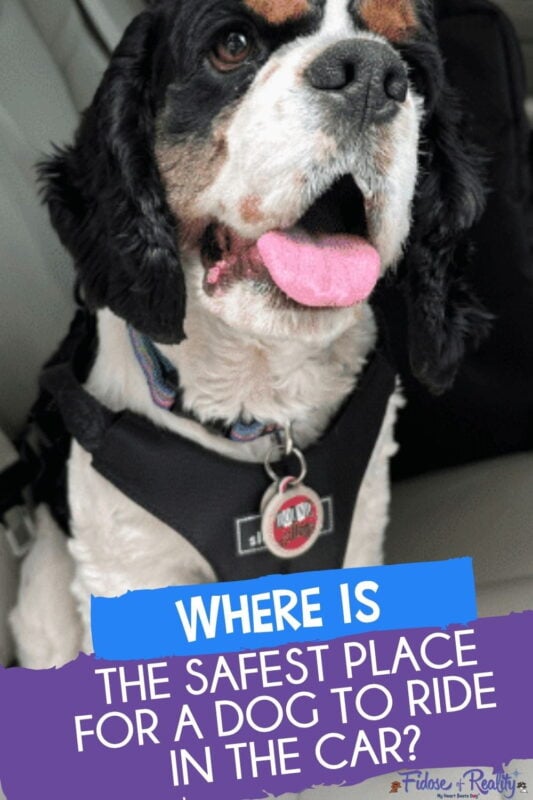
Where Is the Safest Place for a Dog to Ride in a Car?

Dogs ride in cars in all sorts of ways. Some sit in the front passenger seat, others stretch out across the back seat, and some travel in an SUV’s cargo area. You may even spot a dog riding on someone’s lap or hanging their head out of an open window. But where is the safest place for a dog to ride in a car?
Whether you’re heading to the veterinarian, taking a weekend getaway, or embarking on a cross-country road trip, your dog’s safety depends on more than choosing the right seat. Where your dog rides and how your dog is restrained both matter.
For most dogs, a properly fitted, crash-tested vehicle harness makes the back seat the recommended place to ride. Your dog should be secured according to the restraint manufacturer’s instructions. Depending on the dog and vehicle, a properly secured, crash-tested carrier or crate may also be appropriate.
Over the years, we’ve used different ways to secure our Cocker Spaniels during car rides, including a soft-sided crate fastened with a rear seat belt. That was one of our earlier setups, though a crate belted in doesn’t necessarily mean it’s been crash-tested or approved for that installation method.
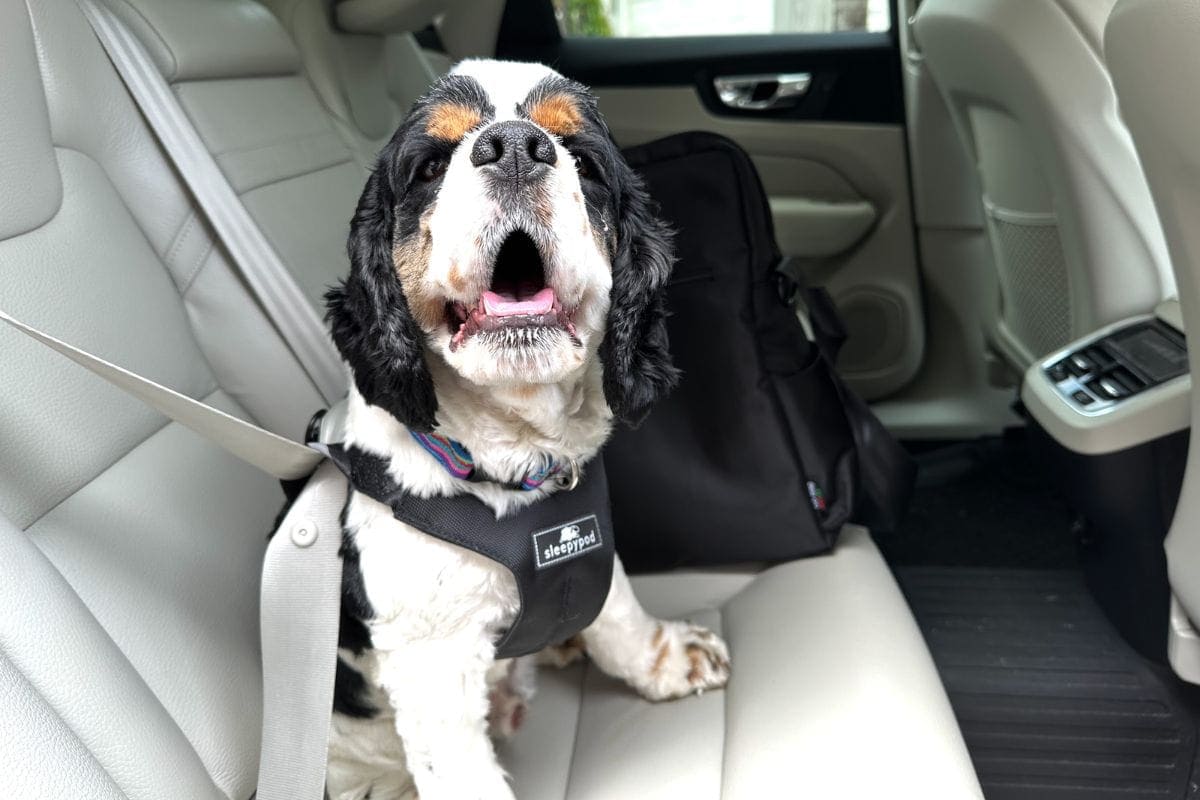
We’re also big fans of Sleepypod Clickit harnesses because they double as walking harnesses. Sir Alvin, my American Cocker Spaniel, can go from the back seat to a walk at a rest stop without changing harnesses. Keeping our dogs properly restrained has long been a priority, whether we’re running errands or heading out on a road trip.
Disclosure: Fidose of Reality is a brand ambassador for Paw Prosper and its family of brands. We only recommend dog products and services we personally use and trust. Opinions are always our own. We do not earn commission on the links in this post.
Why the Back Seat Is Generally the Safest Place for Dogs
The front passenger seat might seem like the perfect spot for your dog to sit, but it comes with serious safety risks. Front airbags are designed to protect human passengers, not dogs sitting, standing, or riding on someone’s lap. Moving your dog to the back seat helps keep them away from the dangers associated with a deploying front airbag.
Over the years, I’ve interviewed pet parents whose dogs were thrown from vehicles during crashes. Their experiences have stayed with me and reinforced why I take car restraints so seriously.
The back seat also keeps your dog away from the steering wheel, gear shift, and pedals. A dog who climbs, paws, or suddenly moves around up front can interfere with your driving in a split second, endangering everyone in the car.
But placement alone isn’t enough. Choose an appropriately sized, crash-tested harness, carrier, or crate, and secure it correctly. Follow both your vehicle owner’s manual and the restraint manufacturer’s instructions, including approved seating positions and attachment methods. Even a crash-tested restraint may not offer its intended protection if installed incorrectly.
Is the Middle Back Seat Safer Than the Side Seats?
There’s no single answer that fits every dog, restraint, and vehicle. The center seat is farther from the side doors, but that doesn’t automatically make it the safest choice for your dog.
What matters most is whether that seating position is compatible with your dog’s restraint. Some car safety harnesses require a three-point seat belt, and seat-belt configurations vary by vehicle. Certain carriers and crates also have specific installation requirements that may limit where they can be placed.
Check your restraint’s instructions for approved seat-belt types and seating positions, then compare them with your vehicle’s layout. Choose a seating position where you can install your dog’s restraint exactly as the manufacturer intends. In our vehicle, Alvin rides in the back seat, and I often sit beside him.
Where Should Your Dog Ride in the Car? A Quick Safety Comparison
| Location | Safety Considerations |
| Front passenger seat | Not recommended due to airbag deployment risks and potential driver distractions. |
| Rear passenger seat | Generally recommended for dogs secured with a properly fitted, crash-tested vehicle safety harness. |
| Center rear seat | May be appropriate if the vehicle’s seat belt configuration and restraint manufacturer’s instructions allow it. |
| SUV cargo area | A properly secured, crash-tested crate may be suitable if approved for that location and installation method. Never allow a dog to ride loose. |
| Driver or passenger lap | Unsafe. Dogs can interfere with steering and other vehicle controls and may be seriously injured during a collision. |
Is the Cargo Area of an SUV Safe for Dogs?
The cargo area can work for dogs, but only with the right setup. A loose dog in the back of an SUV has nothing to secure them in place during a sudden stop or crash. A properly secured, crash-tested travel crate is a different situation entirely. How you secure a crate matters.
The Center for Pet Safety (CPS) cautions that cargo-area anchors are not always rated for crash forces. Ask your vehicle manufacturer whether the available anchor points suit the specific installation, and follow the crate manufacturer’s directions as well
Check your crate’s dimensions against your cargo space, choose a crate appropriately sized for your dog, and install it only as the crate and vehicle manufacturers approve. For smaller pets, Sleepypod also makes pet travel carriers; check their specific vehicle-use and installation instructions.
A cargo barrier may help prevent a dog from entering the passenger area, but it is not a substitute for an independently evaluated crash restraint. Keeping a dog from distracting the driver and protecting that dog in a collision are two different things.
Why Your Dog Needs More Than an Ordinary Seat Belt
A standard car seat belt is designed to restrain a human body, not a dog’s. Dogs need restraints designed for their size, shape, and the forces of a sudden stop or collision.
Options include seat belt tethers, vehicle safety harnesses, travel carriers, and crates. However, not all restraints provide the same level of protection.
Here’s where shopping gets confusing: “Dog seat belt” is a product category, not a safety rating. The label tells you how a product connects to your vehicle, but it doesn’t tell you whether it can withstand a collision.
Terms like “crash-tested” or “safety” on packaging may sound reassuring, but they don’t say what testing was done, who conducted it, or whether the product passed. That’s why independent testing and certification matter.
Dog Seat Belt Tethers vs. Crash-Tested Harnesses
Seat belt tethers are short straps that attach to a dog’s harness and connect to a vehicle’s seat belt buckle or another attachment point. They may help keep a dog from roaming around the vehicle, but limiting distractions isn’t the same as providing crash protection.
A tether that’s too long can allow a dog to be thrown forward during a collision. Attaching one to a collar also creates a risk of serious neck injuries. The Center for Pet Safety (CPS) specifically warns against extension tethers and zipline-style restraints because of the risks they pose to pets and passengers.
An ordinary walking harness isn’t automatically suitable for car travel, either. It’s designed to handle leash pressure during walks, not the forces generated in a collision. Its buckles, stitching, and webbing may not withstand those forces.
A vehicle safety harness should be evaluated under crash conditions. CPS testing considers whether the dog remains restrained, how far the dog moves during impact, and whether the harness and its components maintain their integrity.
Independent testing provides evidence of how a restraint performs, rather than relying solely on a manufacturer’s claims.
What Does Center for Pet Safety Certification Mean?
The Center for Pet Safety (CPS) is an independent nonprofit organization that tests and certifies pet travel safety products. It says it does not accept funding from pet product manufacturers. I’ve met CPS founder Lindsey Wolko and spoken with her about pet travel safety.
That independence matters because “crash-tested” and “CPS-certified” aren’t the same thing.
A manufacturer may conduct its own crash tests, but CPS certification means a product has met independently developed safety standards through the organization’s voluntary certification program.
CPS evaluates factors such as restraint performance, construction integrity, and how well a product limits a dog’s movement during a simulated collision. Products must meet specific requirements to earn certification.
You can verify certification claims by visiting the Center for Pet Safety’s certified product directory. Check the specific model, size, and applicable weight limits rather than assuming certification extends to every product a manufacturer sells.
Sleepypod has several products listed in the CPS certification program, including the Clickit Sport and Clickit Range harnesses. The Clickit Sport became the first dog harness to earn CPS certification, receiving five-star ratings across its four sizes.
The newer Sleepypod Clickit Range also earned a five-star CPS rating following testing in November 2024.
That brings us to the Sleepypod Clickit Range, a harness worth considering for car travel.
A Crash-Tested Car Harness We Use: Sleepypod Clickit Range
We’ve trusted Sleepypod harnesses for years when traveling with our Cocker Spaniels. In fact, I’ve previously shared our experience with the Sleepypod Clickit Sport harness, including how we used it to keep Sir Alvin restrained during our road trips.
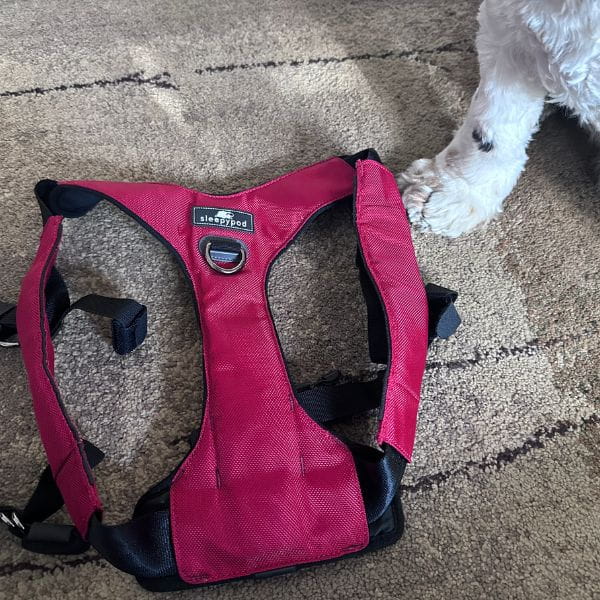
We’re now using the newer Sleepypod Clickit Range in Strawberry Red, which Sleepypod provided to us. It’s designed to secure dogs in the back seat and has features that make it practical beyond the car.
The Center for Pet Safety awarded the Clickit Range a five-star rating after independent crash testing in November 2024. That independent evaluation matters to me as a dog mom. Designed for rear-seat travel, the harness uses a three-point system with the vehicle’s seat belt to restrain a dog’s torso. Its cushioned vest helps distribute collision forces.
Other features include padded shoulder straps, automotive-grade materials, and adjustable sizing to accommodate different canine body shapes. Sleepypod offers regular and long versions to help achieve the proper fit.
Sleepypod Clickit Range: Features at a Glance
| Feature | Sleepypod Clickit Range |
| Primary purpose | Crash-tested vehicle safety harness |
| Independent certification | Five-star Center for Pet Safety rating |
| Available sizes | Small, medium, large, extra large, 2XL |
| Fit options | Regular and long |
| Weight range | 18-110 pounds |
| Available colors | Strawberry Red, Robin Egg Blue, Jet Black |
| Color restrictions | XL and 2XL available only in black |
| Vehicle positioning | Rear passenger seat |
| Restraint system | Three-point design using vehicle seat belt |
| Walking harness | Yes, with front and back leash attachments |
| Vest | Cushioned, energy-absorbing design |
| Additional features | Padded shoulder straps, quick connection and release |
| Included accessories | S-Clip and Buckle Shield |
| Care | Wipe exterior with a damp, soapy cloth |
| Materials | Automotive-grade materials and ballistic nylon |
Can the Sleepypod Clickit Range Double as a Walking Harness?
One feature we particularly appreciate about Sleepypod’s Clickit harnesses is their versatility. The Clickit Range doubles as a walking harness, with strength-tested front and back leash attachment points.
For families traveling with dogs, this means fewer harness changes throughout the day. When it’s time for a potty break, a short walk, or a stop to stretch everyone’s legs, your dog can remain in the same harness.
Secure the harness with the vehicle’s seat belt every time your dog gets back into the car, following Sleepypod’s directions. Learn more about the Sleepypod Clickit Range, including sizing, installation instructions, and safety features.
How to Make Sure Your Dog Is Properly Secured in the Car
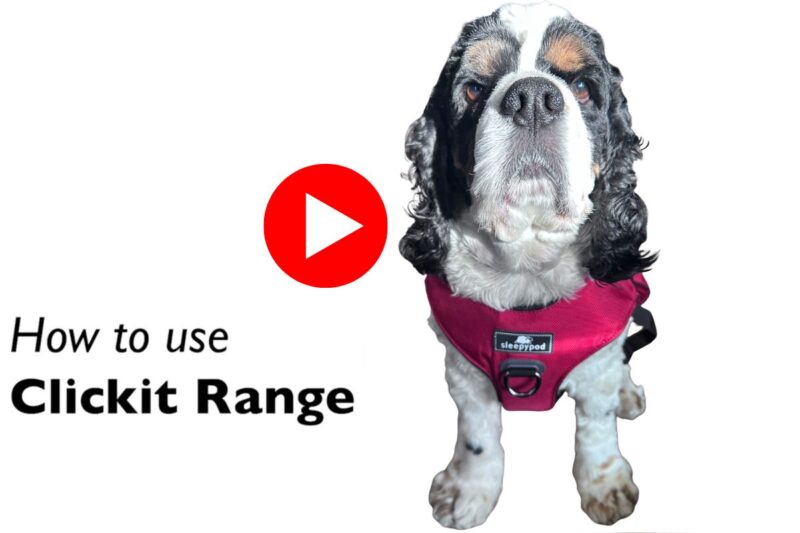
Even a crash-tested dog car harness can’t provide its intended protection if it doesn’t fit properly or isn’t installed correctly. Before driving with Alvin, I practiced fitting his harness indoors, then followed Sleepypod’s instructional video in the car. Once I understood the steps, I secured Alvin for the ride.
Start with the manufacturer’s sizing guide and measure your dog rather than relying on weight alone. A properly fitted harness should be snug without restricting comfortable movement or breathing.
Follow the installation instructions carefully, including how to route the vehicle’s seat belt through the harness. Don’t add extension tethers, clips, or other accessories unless the manufacturer specifically approves them. The same goes for carriers and crates, which have their own installation requirements.
Before every trip, check that the restraint is secure, the straps haven’t twisted or loosened, and all buckles and connections are fastened correctly. A crash-tested restraint is only as effective as its proper fit and installation.
Sleepypod Clickit Range Sizing Guide
| Size | Regular Chest Measurement |
| Small | 19-24 inches |
| Medium | 24.5-29 inches |
| Large | 29.5-33 inches |
| Extra Large | 33.5-41 inches |
| 2XL | 41.5-44 inches |
Note: Sizing and color availability may vary. Always measure your dog and consult Sleepypod’s current sizing guide before purchasing. Average-built dogs will fit in the Clickit Range Regular, while long, narrow, or barrel-chested dogs (sighthounds in particular) are best suited for the Clickit Range Long.
Preparing Your Dog for a Safe Road Trip
Before heading out on a road trip, give your dog time to get comfortable wearing a car safety harness. Start with short sessions at home, followed by brief car rides, and gradually work up to longer trips. Never assume your dog will immediately adjust to a new restraint.
Plan regular breaks for bathroom trips, water, and stretching those four legs. Keep luggage and loose objects secured, and make sure your dog remains properly restrained whenever the vehicle is moving.
Whether you’re traveling for Thanksgiving, taking a weekend getaway, or heading across the country, preparation makes a difference.
For more practical advice, including what to pack, common travel hazards, and lessons we’ve learned from decades of traveling with our Cocker Spaniels, check out our complete guide to taking a safe road trip with your dog.
Frequently Asked Questions About Dog Car Safety
If you have any questions about keeping your dog safe in the car, here are some of the most frequently asked questions covering dog seat belts, crash-tested harnesses, crates, and other important considerations for safer car travel.
The back seat is generally the safest place for a dog riding in a properly fitted, crash-tested car harness. It keeps dogs away from front airbags and reduces the risk of driver distractions. Always follow the restraint manufacturer’s installation instructions, since the safest seating position also depends on your vehicle and the restraint you’re using.
The front passenger seat isn’t recommended for dogs, especially when the airbag is active. Airbags are designed to protect human passengers and can seriously injure dogs during deployment. Even a well-behaved dog can distract the driver. The back seat, paired with an appropriately installed safety restraint, is the better choice.
Both a properly fitted, independently crash-tested dog car harness and an appropriately sized, crash-tested carrier or crate can work. The best choice depends on your dog’s size, comfort, and your vehicle’s configuration. Look for independent safety testing and follow the manufacturer’s instructions for installation and use.
Dogs should never ride loose in an SUV’s cargo area. An unrestrained dog can be thrown during a sudden stop or collision. A properly selected, crash-tested crate may be an option if the vehicle and crate manufacturer approve its placement and installation. Never assume ordinary cargo tie-down points are suitable for securing a dog crate.
Whether a dog can lie down depends on the harness’s design and how it’s installed. Some vehicle safety harnesses allow limited movement, while others are designed to keep dogs more upright. Never loosen a harness or add an extension tether to provide extra room unless the manufacturer specifically permits it.
Yes! The Sleepypod Clickit Range doubles as a walking harness, with both front and back leash attachment points. This makes road trips easier because your dog can switch from riding in the car to enjoying a walk without changing harnesses. Always secure the Clickit Range according to Sleepypod’s instructions before driving again.
Make Every Car Ride a Safer One
We do a lot of car travel with our dogs, and we rely on proper restraints to help protect them, just as we buckle up ourselves. Dogs don’t understand what an airbag does, why a sudden stop can be dangerous, or whether the seat they’re riding in is safe. Making those decisions is our responsibility.
Before you turn the key or press the start button, know where your dog will ride and how they’ll be secured. Make it part of your routine, whether you’re driving five minutes or five hours. For dogs like Alvin, the Sleepypod Clickit Range combines independently tested car restraint with the convenience of a walking harness. That’s one less thing to change when we pull over, and one more reason to make safe travel habits part of every drive and every trip.