How To Tire Out A Dog Without Walking or A Backyard

How do you tire out a dog without walking? Whether it’s pouring rain, freezing cold, unbearably hot, or you just don’t have a backyard, there are plenty of ways to keep your dog physically active and mentally engaged without heading outdoors.
Some pet parents rely on indoor scent games, puzzle toys, hide-and-seek, short training sessions, and appropriate canine fitness exercises to help your dog burn energy, work their brain, and stay entertained. The goal is finding activities that challenge your dog mentally and physically without overwhelming them. Just like people, dogs have individual likes and dislikes, so keep that in mind.
My 4-½-year-old Cocker Spaniel, Sir Alvin, approaches indoor fun the way some people approach a buffet: early, eager, and fully convinced there’s more where that came from. If I’m having fun and am engaged, so is he.
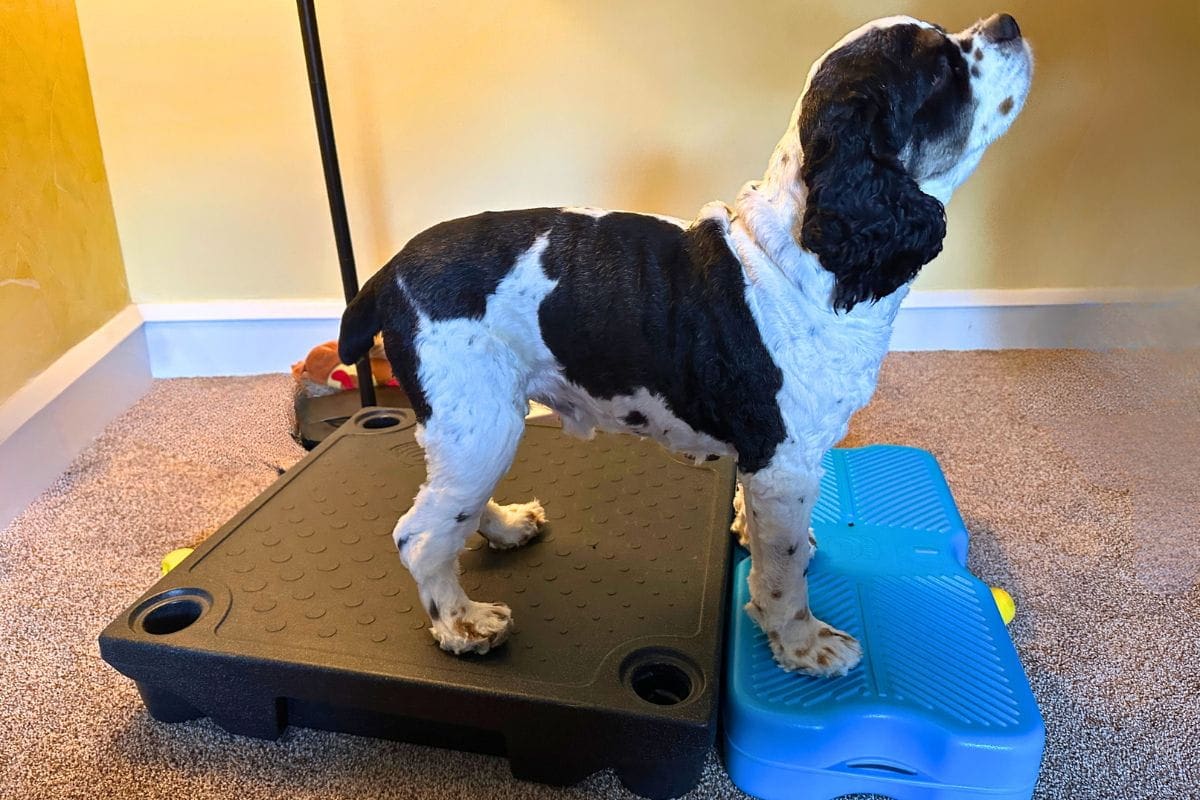
The moment his KLIMB training platform comes out, he’s on it before it’s even unfolded, tail going like he’s personally responsible for its assembly. He knows “go to your spot” like a champ, and we build fun games around that. Whether you have a couch potato or a dog who thrives on indoor fun, there are always ways to keep them engaged. Some of the best indoor activities involve things you already have around the house.
Of course, indoor activities aren’t a universal replacement for walks. Outdoor adventures offer opportunities to explore new sights, sounds, and smells. But when walking isn’t possible, your dog needs additional stimulation, or you have a dog who simply dislikes walks, indoor activities can help fill the gap.
Ahead, I’m sharing 15 ways to tire out your dog without walking or a backyard, including games, training exercises, and activities I use with my own Cocker Spaniel.
Some of the links in this article are affiliate links. As an Amazon Associate, I earn from qualifying purchases. I am also an Etsy and Chewy affiliate.
NOTE: I am a proud Paw Prosper brand ambassador. We always recommend products we use, incorporate into our dog’s life, and believe other dog parents will enjoy, too.
Can You Really Tire A Dog Out Without Walking?
Yes! Dogs can become mentally tired through training, problem-solving, and enrichment activities, even without going for a walk. Physical exercise works their bodies, while mental stimulation challenges their brains. Both contribute to a dog’s overall well-being, and I’ve been practicing both for decades.
However, a mentally tired dog isn’t necessarily a physically exercised dog. Both are important, and the goal is to find a healthy balance rather than simply wearing your dog out. Age, breed, health, fitness level, and individual preferences all play a role in determining what’s appropriate.
Certified Professional Dog Trainer-KA, Robin Bennett says enrichment doesn’t have to be an hour-long project. It can be things like
- 5 minutes of indoor scent work before you leave for work
- Feeding breakfast from a puzzle toy instead of a bowl
- Teaching one new trick during a television commercial break
- A 10-minute platform training session instead of a third lap around the block
The goal isn’t perfection, but consistency. And the more you build enrichment into your dog’s routine, the more you’ll notice: they’re calmer, more focused, and easier to live with. Not because you’ve trained them into submission. Because you’ve met their actual needs and made them happy by doing so.
Sir Alvin knows our indoor fun play sessions so well that he actually sits and stares at me when it’s time to get started. We have indoor play sessions at least once a day, and he’s apparently appointed himself the official timekeeper. I love that these activities give him something to look forward to while keeping his mind and body engaged. He will sit by my office chair and stare me down when it’s time for indoor fun!
10 Ways to Tire Out Your Dog Without Walking or a Backyard
Okay so no backyard? Bad weather day? Too busy for a walk? These indoor activities give your dog the opportunity to think, move, bond with you and problem solve without ever leaving your residence. Mix and match these based on your dog’s age, health, and interests, and keep sessions short, rewarding, and safe. NEVER scold a dog for not participating. You want to strengthen your bond, not diminish it.
1. Play Hide-and-Seek With Your Dog
Ask your dog to sit and stay, or have someone hold them while you hide somewhere easy, like behind a door. Call your dog’s name and celebrate when they find you!
As your dog catches on, try trickier hiding spots, such as behind a shower curtain or in another room. Hide-and-seek encourages scenting, strengthens recall, and gives your dog a fun job.
Keep hiding spots safe and avoid slippery surfaces or areas where your dog could get hurt.
I’ve been playing hide-and-seek with my dogs for many years, and two of our specific methods are:
- Hide and Seek the Toy: Hiding your dog’s favorite toy around the room or house to let them hunt it down using their nose.
- Human Hide and Seek: Having a family member hold the dog or practice a “stay” cue while you hide in another room with a high-value treat. Once hidden, call the dog to find you, turning a basic recall drill into an exciting game.
2. Create an Indoor Scent-Search Game
Put your dog’s nose to work! Start by placing a few treats where your dog can see them, then say, “Find it!”
Once your dog understands the game, hide treats under cups, around furniture, or inside a loosely folded towel.
Gradually make the searches more challenging. You can even hide treats in different rooms.
Scent games encourage dogs to use their natural sniffing abilities while providing mental stimulation. Avoid hiding treats near electrical cords, toxic plants, or anything your dog shouldn’t chew.
Pro Tip: Why wait until Easter to have an indoor egg hunt? I buy refillable Easter eggs with my dog’s favorite treats so he can hunt them down and crack them open! He absolutely loves racing around to find them and breaking them in half to grab the snack inside. Just be sure to supervise closely so your dog doesn’t accidentally swallow any plastic pieces.
3. Offer Interactive Food Puzzles
Food puzzles aka doggy games turn mealtime into a brain game. Dogs must figure out how to slide, flip, nudge, or move different pieces to uncover food.
Start with an easy puzzle and gradually increase the difficulty as your dog becomes more confident.
These activities encourage problem-solving and independent play. Supervise your dog, choose appropriately sized puzzles, and consider using part of their regular meal instead of extra treats.
Indoor brain games and puzzles challenge your dog to think, solve problems, and put their natural instincts to work. Dogs experience much of the world through their noses, making scent-based activities especially engaging and rewarding.
Since many of these games involve treats, choose high-value rewards that motivate your dog without overdoing it. Keep track of how many treats you’re using, and consider using part of your dog’s regular meals. Mental stimulation is important, but so is maintaining a healthy weight.
Read more about our favorite doggy games in our 101 Things to Do Indoors With Dogs article.
4. Teach Your Dog a New Trick
Learning something new is a terrific way to exercise your dog’s brain.
Try teaching a simple trick such as spin, shake, touch, bow, or wave. Break the behavior into small steps and reward your dog as they learn.
Keep training sessions short and upbeat. If your dog becomes frustrated, return to an easier step and end on a positive note.
The goal isn’t perfection. It’s giving your dog something interesting to figure out while spending quality time together.
My Cocker Spaniels, Dexter and Sir Alvin, have earned official American Kennel Club (AKC) Trick Dog titles, including Novice and Intermediate levels. Trick training is one of my favorite ways to keep dogs mentally and physically engaged, especially indoors. Learning new skills builds confidence, reinforces obedience, burns energy, and strengthens the bond between dogs and their people.

We also enjoy exploring canine freestyle (dog dancing to music), fitness exercises, and other indoor activities that challenge a dog’s mind and body. The best part? You don’t need a backyard to have fun, learn something new, and spend quality time together.
Robin Bennett says positive reinforcement training should be enjoyable for dogs and their people. Blue-9 Pet Products recommends incorporating games, keeping sessions short, and using rewards that motivate your individual dog. The goal is to make learning something your dog looks forward to rather than another chore.
5. Play the Name-That-Toy Game
Does your dog have a favorite toy? Turn it into a learning opportunity!
Choose one toy and repeat its name as you hand it to your dog. Reward them for interacting with it.
After several sessions, place that toy next to another and ask your dog to find the one you’ve named. As your dog improves, introduce additional toys.
This game encourages concentration, memory, and listening skills. Some dogs become surprisingly good at recognizing their toys by name. Some dogs are totally not into this game, which is why I’m sharing 15 time-tested tips from which you can choose.
I’ve always taught my dogs “go get” and then the name of the toy. I show them over and over and praise them. Start by keeping the toy you want them to retrieve nearby. Yes, they can see it clearly and that’s the whole point. Reward like they just won Best in Show when they retrieve or identify the toy. Build from there.
6. Practice Place Training
Place training teaches your dog to go to a designated spot and remain there until released or “let go.”It’s a great way to build focus, practice impulse control, and give your dog something productive to do indoors.
Start by encouraging your dog onto a stable platform and rewarding them when all four paws are on it. Introduce a cue such as “place” or “go to your spot.” Gradually increase how long your dog stays there before adding distance or distractions.
I use and recommend the Blue-9 KLIMB training platform with both of my Cocker Spaniels, Dexter and Sir Alvin, and it’s one of those tools that has become part of our everyday lives.
When Sir Alvin was a puppy, we placed the KLIMB near the door and taught him to sit on it when he needed to go outside. We also used it to teach him not to jump on visitors. And when those sharp puppy teeth started targeting our shoes or furniture, I’d say, “Go to your spot,” and off he’d go to his KLIMB for a treat or a little playtime.
Today, we use the KLIMB for short indoor training sessions, practicing calm behavior, and working on focus around distractions. We also use the KLIMB Jr. as part of our indoor training routines.
The beauty of place training is that you’re teaching your dog a skill that carries over into everyday life. It’s not just about getting onto a platform. It’s about learning to listen, concentrate, and settle when there’s something more exciting happening nearby.
Want to see how we use the KLIMB for place training? Read my article, What Is Place Training For Dogs? Why Every Dog Needs It.
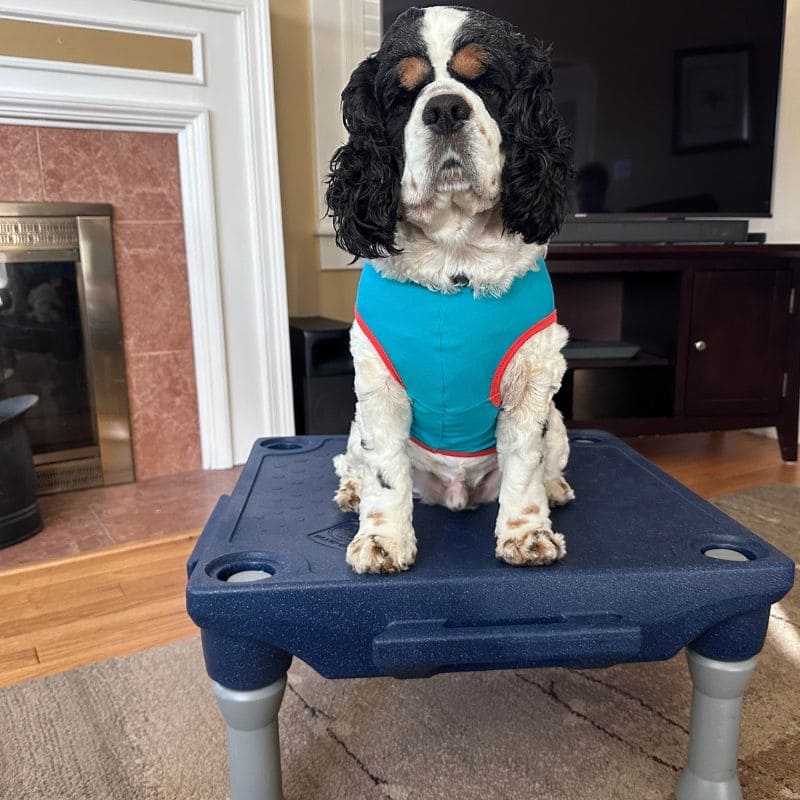
Use code FIDOSE20 to save 20 percent off your Blue-9 order directly from their website. The discount applies to most items.
7. Create an Indoor Training Circuit
Turn a small area of your home into a mini training circuit!
Set up two or three stations and guide your dog between them.
For example, ask your dog to sit on a training platform, touch a target with their nose, and finish with a down on a mat.
Training circuits combine gentle movement with concentration and familiar commands.
Start with exercises your dog already understands, and keep plenty of space between stations. Use non-slip flooring and avoid rushing through the activities.
You can gradually introduce new exercises as your dog gains confidence.
One of my favorite indoor training circuits with Sir Alvin involves setting up his Blue-9 KLIMB, KLIMB Jr., and a training mat. I guide him from one station to the next, practicing different commands along the way. When he finishes the circuit, he taps my hand with his nose to earn a treat. It’s a fun way to combine movement, mental stimulation, and obedience training. Plus, Alvin gets to put his thinking cap on while we spend quality time together.
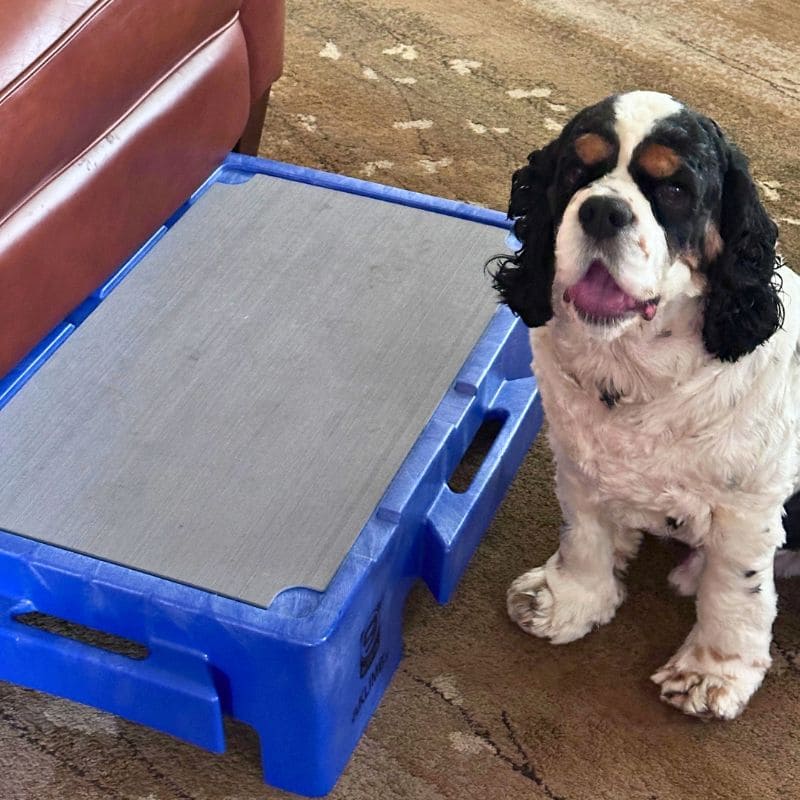
Use code FIDOSE20 to save 20 percent off your Blue-9 order directly from their website. The discount applies to most items.
8. Practice Target Training
Target training teaches your dog to touch a specific object with their nose or paw. It’s a fun way to build focus, improve coordination, and introduce new behaviors without needing much room.
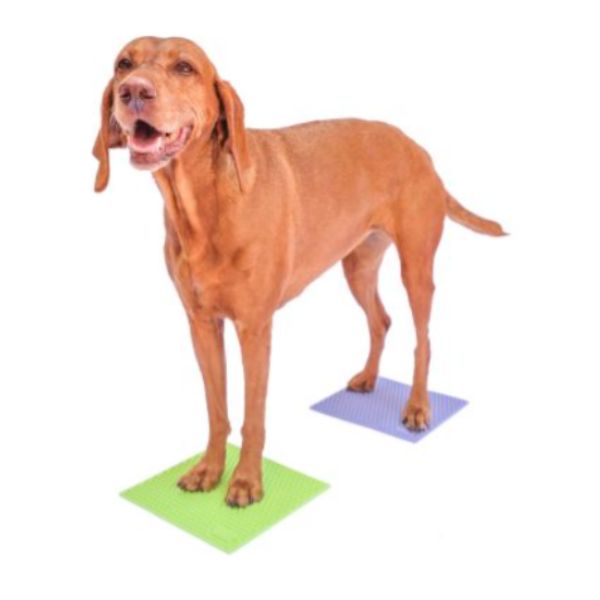
The FitPAWS TRAX Targets are designed for paw-targeting exercises that encourage dogs to become more aware of where they’re placing their feet.
Start by placing one target on a nonslip floor and letting your dog investigate it. Reward their interest, then gradually encourage them to place a paw on the target. Once they understand the game, move the target to another location and repeat.
As your dog progresses, you can introduce a second target or practice placing different paws on designated spots.
FitPAWS offers a helpful guide to getting started with TRAX Targets, including tips for introducing the targets, encouraging your dog to interact with them, and incorporating them into training sessions. Learn how to use FitPAWS TRAX Targets
9. Play Indoor Fetch With a Twist
Indoor fetch doesn’t need to be endless running. Instead of repeatedly throwing a toy, turn indoor fetch into a combination of retrieving and training.
Ask your dog to sit, toss a soft toy a short distance, and release them to retrieve it.
When your dog returns, ask for another familiar behavior, such as touch, down, or spin, before tossing the toy again.
You can also hide the toy nearby and ask your dog to find it.
This variation adds mental challenges to a familiar game while keeping physical activity controlled. Choose a clear, non-slip area and avoid fast turns, jumping, or chasing toys across slippery floors. I love this game because it doesn’t require a lot of space but it engages the mind and body.
10. Play Impulse-Control Games
Impulse-control games help dogs practice patience and make thoughtful choices.
Try asking your dog to wait briefly before you set down their food bowl or practicing “leave it” with a treat in your closed hand. You can also ask your dog to wait for a release cue before retrieving a favorite toy.
Begin with easy exercises and gradually increase the challenge.
These games require concentration, so keep sessions short and reward your dog’s successes.
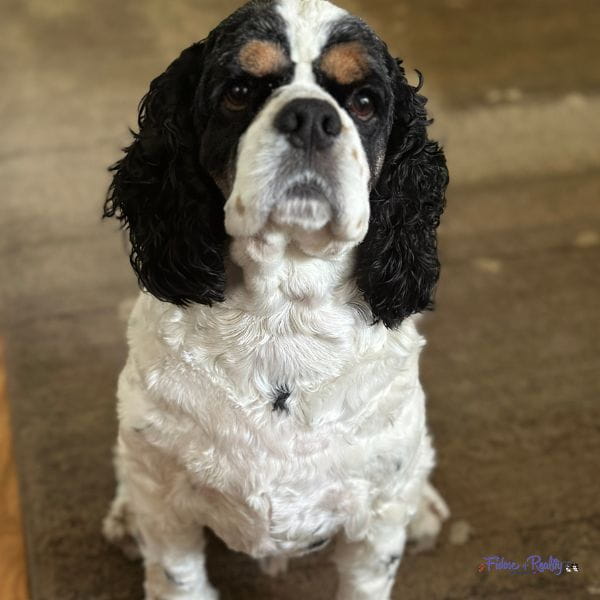
The word I use with Alvin is “wait” and he knows not to move or attempt to eat the treat. I use “wait” when filling his puzzle games, too. He sits like a little gentleman while I fill his games with snacks, see?
How To Create a Daily Indoor Enrichment Routine For Your Dog
Bottom line: You don’t need an elaborate setup or hours of free time to keep your dog engaged indoors. A few short activities spread throughout the day can make a real difference.
The key is variety. Try combining different types of enrichment: start the morning with five minutes of trick training, add a scent game in the afternoon, and wind down in the evening with a food puzzle or a quick indoor training circuit. Mixing mental and physical activities keeps things interesting and works different skills.
With Sir Alvin, I rotate activities so he’s not doing the same thing every day. Some days we focus on training exercises, other days on games, and many days include his Blue-9 equipment. The goal isn’t to exhaust him. It’s to give him chances to think, move, and have fun.
Pay attention to your dog’s enthusiasm and energy level. If they lose interest, seem frustrated, or show signs of fatigue, it’s time for a break. Every dog is different, so adjust the activities and timing to fit your dog’s age, health, and personality.
Need more inspiration? Check out our 101 Indoor Activities For Dogs article for dozens of ideas to keep your routine fresh.
Remember: mental enrichment should be enjoyable, not one more item on your dog’s to-do list.
How Much Mental Stimulation Does a Dog Need?
There’s no magic number when it comes to mentally stimulating your dog. Every dog is different, and factors like age, breed, health, energy level, and personality all play a role.
For some dogs, five minutes of training may be plenty at one time. Others enjoy several short activities throughout the day. The key is finding a healthy balance between physical exercise, mental enrichment, playtime, and rest.
According to Bennett, even five to ten minutes of intentional canine fitness activities each day can be beneficial. While this recommendation focuses on physical fitness rather than a specific daily mental stimulation requirement, it’s a good reminder that meaningful activities don’t have to take hours.
How can you tell when your dog has had enough? Watch their body language. If your dog loses interest, becomes frustrated, or struggles with familiar commands, it’s time for a break. A dog who finishes an activity and settles comfortably afterward may be getting just the right amount of stimulation.
Remember, the goal isn’t to exhaust your dog until they collapse on the couch. It’s to provide activities that challenge their mind, engage their body, and satisfy their natural instincts.
And don’t forget downtime! Even energetic dogs need opportunities to relax and recharge.
How To Keep Your Dog Safe During Indoor Exercise
Indoor exercise can be a terrific way to keep your dog active, but safety should always come first. Just because you’re exercising inside doesn’t mean your dog can’t slip, strain a muscle, or overdo it.
Here are a few precautions:
- Choose a nonslip surface. Hardwood and tile floors can be slippery, especially when dogs are turning, jumping, or changing directions. Use rugs, yoga mats, or other secure flooring.
- Clear your training area. Move furniture, cords, and anything your dog could bump into or trip over.
- Start slowly. Introduce new exercises gradually, particularly when using canine fitness equipment.
- Use equipment appropriately. Follow the manufacturer’s instructions for products like the Blue-9 KLIMB and FITPAWS fitness tools.
- Watch for signs of fatigue. Excessive panting, slowing down, reluctance to participate, or changes in movement are signals to stop.
- Consider your dog’s health. Puppies, seniors, and dogs with orthopedic, neurological, or other medical conditions may need modified activities. Ask your veterinarian before introducing unfamiliar fitness exercises.
With Sir Alvin, I always focus on controlled movements rather than speed. Our indoor activities aren’t a race, and I want him to enjoy what we’re doing without putting unnecessary stress on his body. Sometimes we dump a box of toys and play together.
One final reminder: Mental stimulation and physical exercise should leave your dog feeling satisfied, not sore or exhausted. Short, positive sessions are often more productive than pushing through one long workout.
Our Favorite Tools for Indoor Dog Fun and Enrichment
You don’t need a house full of expensive equipment to keep your dog entertained indoors. Some of our favorite activities involve everyday household items, but a few well-designed training tools have become staples in our home.
Here are four we use or are incorporating into Sir Alvin’s indoor fitness routine.
Blue-9 KLIMB Training Platform
The Blue-9 KLIMB has been part of our lives for years, first with Dexter and now with Sir Alvin. We use it for place training, practicing commands, building confidence, and helping Alvin focus when distractions are nearby.
It’s also a key part of our indoor training circuits. I love that one piece of equipment can serve so many purposes beyond teaching a dog to sit or stay.
Use code FIDOSE20 to save 20 percent off your Blue-9 order directly from their website. The discount applies to most items.
Blue-9 KLIMB Jr.
The smaller KLIMB Jr. gives us another station for indoor training. We use it alongside our full-size KLIMB and a mat, guiding Alvin between stations and rewarding him for completing the circuit.
It’s a simple way to turn familiar commands into an engaging activity that gets his mind and body working together.
Use code FIDOSE20 to save 20 percent off your Blue-9 order directly from their website. The discount applies to most items.
FITPAWS TRAX Targets
Target training encourages dogs to think about where they’re placing their paws. The FITPAWS TRAX Targets provide designated spots for practicing paw placement, coordination, and body awareness.
They’re useful for introducing controlled movements and adding variety to indoor training sessions.
For instructions, see the official FITPAWS TRAX Targets Product Guidelines.
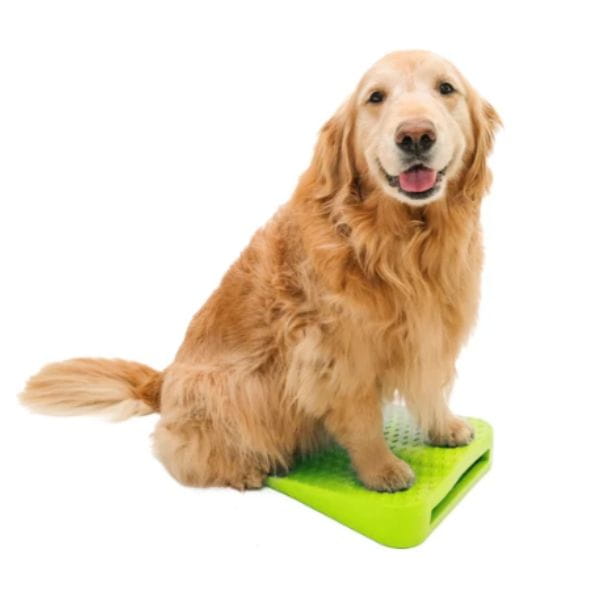
FITPAWS Balance Ramp
The FITPAWS Balance Ramp is designed for canine fitness activities that challenge balance, stability, and body awareness.
Introduce balance equipment gradually, following the manufacturer’s instructions and choosing exercises appropriate for your dog’s age, health, and experience.
Frequently Asked Questions About Tiring Out a Dog Without Walking
How can I tire out my dog quickly without walking?
Try a short scent-search game, hide-and-seek, trick training, or an interactive food puzzle. Activities that encourage your dog to sniff, think, and solve problems can provide meaningful mental stimulation in just a few minutes.
Can mental stimulation tire out a dog?
Yes! Mental stimulation requires dogs to concentrate, make decisions, and solve problems. Activities like scent work, puzzle toys, and learning new tricks can be mentally tiring. However, mental enrichment shouldn’t completely replace appropriate physical exercise.
How do you tire out a high-energy dog indoors?
Combine mental challenges with safe physical activities. Try an indoor training circuit, controlled fetch, place training, or target training. Rotate activities to keep your dog interested, and include breaks to prevent overstimulation.
What are the best indoor exercises for dogs?
Some of the best indoor exercises include hide-and-seek, gentle fetch, trick training, place training, and canine fitness activities. The right exercises depend on your dog’s age, physical condition, energy level, and available space.
How do you exercise a dog without a backyard?
You don’t need a backyard to keep your dog active. Indoor games, training sessions, food puzzles, and canine fitness equipment can provide opportunities for movement and mental enrichment. You can also take advantage of safe, dog-friendly indoor spaces outside your home.
Can indoor activities replace daily dog walks?
Indoor activities can help when outdoor walks aren’t possible, but they aren’t necessarily a complete replacement. Walks provide opportunities for sniffing, exploring, social experiences, and physical exercise that can be difficult to replicate indoors.
How do I know when my dog is mentally tired?
A mentally satisfied dog may settle down, relax, or take a nap after an activity. Other dogs may show signs of fatigue by losing interest, slowing down, or struggling with familiar tasks. Watch your dog’s body language and stop before frustration or exhaustion sets in.
Final Thoughts To Keep Your Dog Happy and Engaged Indoors
Your dog wants time with you and to feel loved, engaged, and happy. That means you don’t need a backyard, perfect weather, or an elaborate home setup to keep your dog active. Sometimes, all it takes is a handful of treats, a favorite toy, and a little creativity.
Sir Alvin is living proof that indoor activities can be just as much fun for the human as they are for the dog. Whether we’re practicing tricks, playing games, or working through our indoor training circuit, I love watching him figure things out. That little Cocker Spaniel brain is always working, especially when there’s a treat waiting at the finish line!
Tools like the Blue-9 KLIMB, KLIMB Jr., and FITPAWS fitness equipment give us even more ways to make indoor training interesting. The time you spend interacting with your dog is priceless.
Start with one or two activities from this list, see what your dog enjoys, and build from there. Keep things positive, celebrate the small victories, and remember that rest is just as important as play. I’d love to hear how things work out for you, pun intended.
Let me know in the comments below what you do to keep your dog(s) engaged.