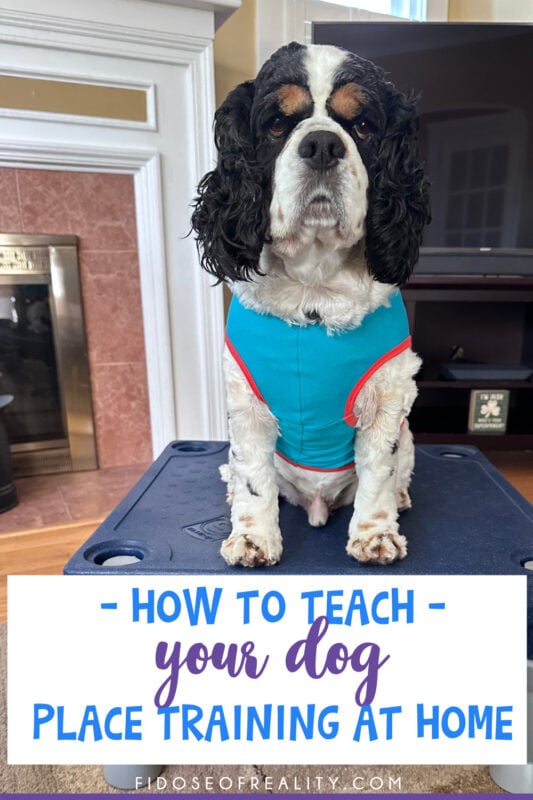
What Is Place Training for Dogs? Why Every Dog Needs It

The doorbell rings, your company arrives, and your dog races to greet everyone. Sound familiar? I’ve been there! Place training for dogs teaches your pooch where to go and helps them stay calm during everyday situations like this and more.
Now imagine your dog calmly walking to one designated spot, settling comfortably, and waiting until you release them. That’s the goal of place training.
Whether you’re welcoming visitors, working from home, heading to a dog-friendly restaurant, or simply enjoying a quiet evening, place training helps dogs learn focus, confidence, and calm behavior. Here’s what place training is, why it’s so valuable, and how to teach it.
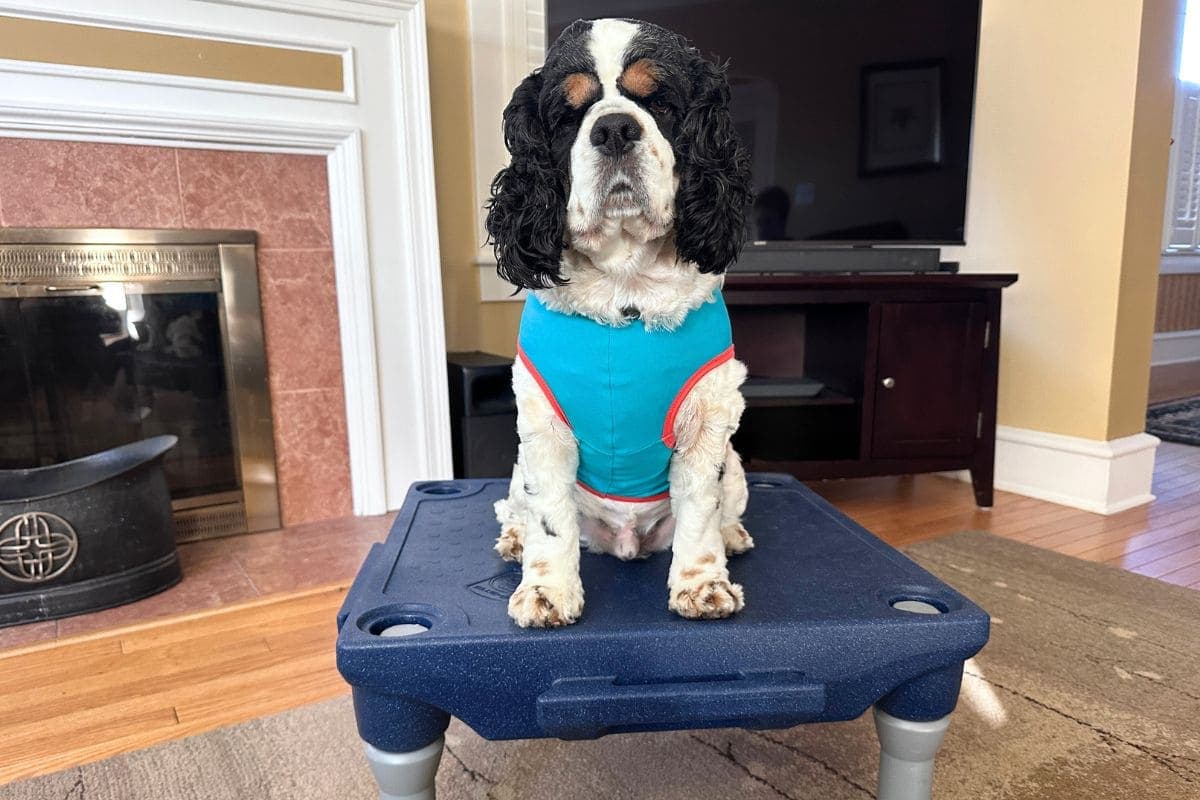
Place training teaches your dog to go to a designated location and remain there until you release them. It builds focus, confidence, and impulse control while helping dogs stay calm during everyday situations. Many positive reinforcement dog trainers choose an elevated training platform like the KLIMB because it provides a clear physical boundary that’s easy for dogs to understand.
Some of the links in this article are affiliate links. As an Amazon Associate, I earn from qualifying purchases. I am also an Etsy and Chewy affiliate.
What Is Place Training for Dogs?
Place training teaches your dog to go to a specific spot, usually an elevated platform, and stay there until you release them. Sounds pretty simple, and it is. It’s actually one of the most useful commands you’ll ever teach.
How “go to your place” is different than “down.” Down is about body position. Place is about location. Your dog can be sitting, standing, or lying on their platform, but the point is they’re there, not what shape they’re making while they’re there.
How “go to your place” is different from “stay.” Stay freezes your dog wherever they happen to be, such as on the kitchen floor, in a doorway, or in the middle of the yard. Place gives your dog a destination. It’s the difference between “don’t move” and “go to your spot and don’t move.” That destination does a lot of heavy lifting, which is part of why trainers like it so much.
Why trainers love the elevated KLIMB platform from Blue-9. I asked dog trainer Robin Bennett why she uses a platform instead of a mat.
“The focus is better when the dog is elevated, but more importantly, the owner and dog get more consistent at what they’re doing.
I have taught place using a mat before, and humans and dogs both get sloppy. Like, if one foot is off the mat, does it count? Often the owner won’t reposition the dog, so the dog slowly moves a bit farther off the mat, and the owner usually is like ‘well, close enough.’
With an elevated platform, it’s very obvious to the dog and owner whether or not the dog is on or off the platform. So consistency becomes much greater, and therefore training gets better. But then it does also start teaching the dog to focus, to figure out what’s next, so focus becomes stronger.”
In other words: a mat lets everyone cheat a little. A platform doesn’t. And that clarity is what makes the training actually stick.
Use code FIDOSE20 to save 20 percent off your Blue-9 order directly from their website. The discount applies to most items.
Why Should Every Dog Learn Place Training?
Place training solves the most common problems most dog parents are actually dealing with, not theoretical ones.
It gives your dog a job during chaos. The doorbell rings, guests arrive, dinner’s on the counter, kids are running around. “Go to your place” gives your dog somewhere to be instead of somewhere to get into trouble. Instead of managing the chaos in real time, you just say “place” (or “go to your spot,” as I do with Sir Alvin), and it’s handled.
It builds impulse control. A dog who can hold place while you drop food, open the door, or walk away is a dog who’s learned to think before reacting. That skill doesn’t stay on the platform as it shows up everywhere else too.
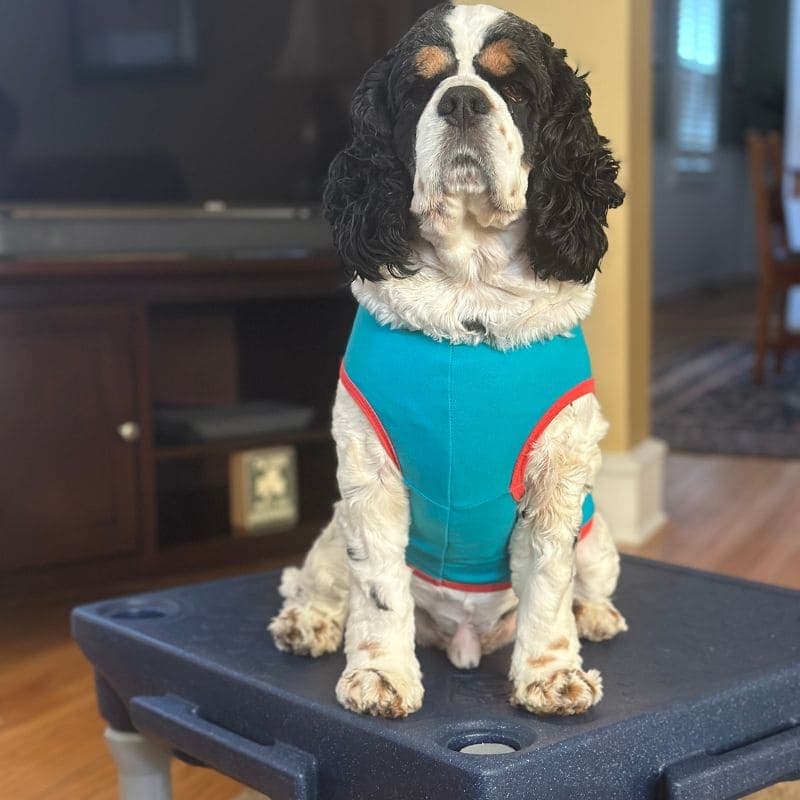
It’s portable. Once your dog understands the concept, “place” can become any elevated surface, or eventually any designated spot: a rug, a corner, a spot at a café. The platform is just how you teach the concept in the beginning. We take our KLIMB or KLIMB, Jr. with us on vacation and keep one on our deck.
It’s a reset button. An overexcited, overstimulated, or anxious dog can settle faster in place than almost anywhere else. It gives them a clear, known task or ‘job,’ and knowing the job is often what calms a dog down.
It helps you become a more consistent trainer. Unlike some training exercises where “close enough” can creep in, place training has a clear beginning and end. Your dog is either on the platform or off it, making it easier to reinforce the correct behavior every time. That consistency leads to clearer communication and faster learning.
Bottom line: Place training isn’t a trick. It’s a management tool, a focus builder, and an impulse-control exercise, all in one command. It’s also ideal for dogs to know in various situations.
When Should You Use Place Training?
Place training isn’t just for formal training sessions. Once your dog understands the cue, you’ll find yourself using it throughout the day, on trips, and in many different situations like:
- When guests arrive, help your dog greet visitors calmly rather than rushing the door.
- During family meals, give your dog a comfortable place to relax instead of begging at the table.
- Fun Fact: The KLIMB from Blue-9 allows you to use the Restore Dog Bed, which my dog loves as a standalone bed. He loves chilling out atop his KLIMB (oh, and p.s., it allows for the most adorable photos)
- While cooking, keep your dog safely out from under your feet in the kitchen.
- Working from home, encourage your dog to settle nearby while you focus.
- Outdoor dining: Helps your dog relax at dog-friendly patios or cafés.
- Travel and camping: Give your dog one familiar place wherever your adventures take you.
- Holiday gatherings: During our annual Christmas in July celebration, Sir Alvin’s place cue helps him stay in the fun without getting overwhelmed by all the excitement. It’s also great for big groups and when there’s a lot of activity going on.
Do You Need an Elevated Training Platform?
No. You can teach place training using a dog bed, mat, towel, or even a designated spot on the floor. However, many trainers prefer an elevated platform because it creates a clear physical boundary that’s easier for dogs to understand.
A mat can certainly work, especially when you’re first introducing the concept. The challenge is that it often creates a gray area. If your dog has one paw off the edge, are they still “on place?” Many pet parents unintentionally relax the rules, and over time, both they and their dogs become less consistent.
An elevated platform removes that uncertainty. Your dog is either on the platform or off it. That clear distinction helps you reward the right behavior consistently, making communication clearer and training easier for both of you.
The KLIMB elevated platform may be a good choice if you:
- Want to use place training as an everyday life skill, not just a training exercise.
- Have a dog who regularly tests boundaries.
- Want clearer, more consistent training sessions.
- Are working with a dog who is easily distracted and benefits from a defined space.
I’ve found the Blue-9 KLIMB to be especially helpful because the elevated design leaves little room for confusion. Sir Alvin quickly learned exactly where I wanted him, which made it easier for both of us to stay consistent during training. The KLIMB and KLIMB Jr platforms are his chill, relaxing spots.
Use code FIDOSE20 to save 20 percent off your Blue-9 order directly from their website. The discount applies to most items.
How to Teach Place Training to Your Dog
Start small. Here’s how to place training to your dog:
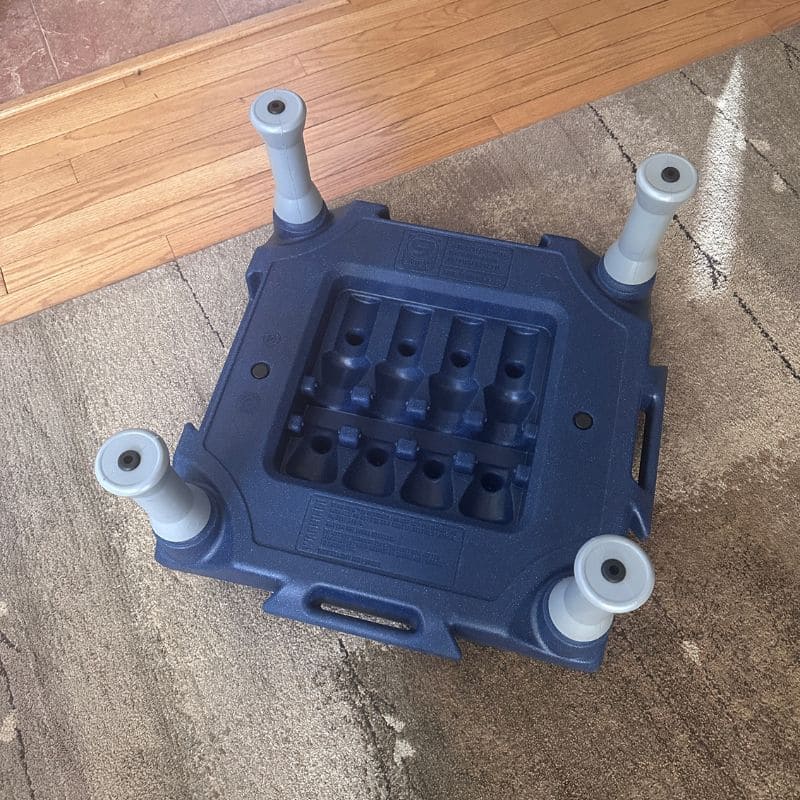
1. Pick your platform. Not all platforms are created equal, and the KLIMB is the one that stays in permanent rotation. It’s sturdy at any size, as Sir Alvin is a Cocker Spaniel, not a Great Dane, and it holds its ground without wobbling. It adjusted as his skills grew, and it breaks down and packs flat, so training doesn’t have to stay stuck at home. The platform does a lot of the work for you. I love that the KLIMB just gets out of the way and lets it happen.
2. Lure them on. Toss a treat onto the platform. Let your dog follow it up. The second all four paws land, mark it (“yes!”) and reward.
3. Add the word. Once they’re reliably hopping up for the treat, start saying “place” (or go to your spot) right before they get on. You’re building the association, not testing it yet.
4. Build duration. Ask for a few seconds before the treat. Then five. Then ten. Don’t rush this part, as duration is the whole game.
5. Release them. Teach a clear release word (“okay,” “free,” whatever you like) so your dog learns place has a start and an end. Without a release, dogs guess when they’re done, and that will mess up any consistency you’ve built.
6. Add distance and distractions. Once your dog holds place with you standing next to them, start stepping back. Then add real-life distractions like a doorbell, food on the counter, and guests walking in. This is where place training earns its keep. You need to reward like your dog just won Best in Show.
7. Reset when they break. If your dog steps off early, don’t scold; just walk them back and try again with a shorter duration. Breaking place should be boring, not dramatic.
The whole thing usually takes a few short sessions a day over a week or two before it’s solid. Promise yourself to be patient and make it fun. The KLIMB is a happy place, so treat it as such and be excited for your dog.
Bonus: The folks at Blue-9 offer a Place Training course from the comfort of home so you can refer to it again and again for a full year.
Common Mistakes to Avoid During Place Training
Despite our best efforts as people, sometimes even the best trainers and pet parents trip up. Here are some of the more common mistakes to avoid:
- Letting “close enough” count. If your dog has stepped off the platform, they’re off. Being consistent helps your dog understand exactly what’s expected.
- Skipping the release cue. Without a clear release word, your dog has to guess when place is over. A consistent release cue tells your dog the exercise has ended.
- Increasing duration too quickly. Jumping from a few seconds to several minutes can set your dog up for failure. Build time gradually as your dog’s confidence grows. This is what I did with Sir Alvin in our training sessions.
- Keeping training sessions too long. Short, positive sessions are more effective than long ones. Aim for 3 to 5 minutes at a time, especially when your dog is just learning. You can always do several short sessions throughout the day. Ending while your dog is still engaged helps keep training fun and sets them up for success.
- Repeating the cue over and over. Say “place” once, then guide or encourage your dog if needed. Repeating the cue teaches your dog they don’t have to respond the first time they hear it.
- Making mistakes a big deal. If your dog leaves place, calmly guide them back and try again. Staying patient keeps training positive and productive.
- Training only in quiet environments. Once your dog understands the basics, practice in different locations and around everyday distractions so the behavior holds up in real life.
- Ending on a setback. Try to finish each session with a successful repetition, even if it’s a short one. Ending on a positive note helps build confidence for the next session.
- Using an unstable platform. A platform should be sturdy and secure so your dog feels confident stepping on and staying in place.
- Using different cue words. Switching between “place,” “bed,” or “spot” can confuse your dog. Choose one cue and use it consistently.
Fun Fact: If you are interested in your dog achieving the Canine Good Citizen title (CGC), learning place training is a perfect way to prepare.
Frequently Asked Questions
Place training teaches a dog to go to a designated spot and remain there until released. While many trainers prefer an elevated platform, place training can also be taught using a dog bed or mat. The goal is to build focus, impulse control, and calm behavior in everyday situations.
No. Stay tells your dog not to move from their current position. Place tells your dog to go to a specific location and remain there until released.
A mat can work, especially when you’re first teaching the concept. However, many trainers and pet parents, including myself, prefer an elevated platform because the boundary is clear, making it easier for both dogs and handlers to stay consistent.
Many dogs understand the basics within one to two weeks of consistent practice, although every dog learns at their own pace. Age, distractions, and regular training sessions all affect progress.
Aim for 3 to 5 minutes when your dog is first learning. Several short sessions throughout the day are usually more effective than one long session. (We make the training and use of the place command lots of fun so my dog has a great time, too!)
Dog trainers recommend between 10 and 12 weeks of age for puppies.
Many trainers prefer elevated platforms because they create a clear physical boundary. As dog trainer Robin Bennett explained, there’s no guessing whether a dog is “close enough.” They’re either on the platform or off it, making training more consistent for both the dog and the handler.
Place training can be a helpful management tool for some reactive or anxious dogs by giving them a familiar task during exciting situations. However, it isn’t a substitute for behavior modification or professional training when those are needed.
Yes. Once your dog understands the place cue at home, practice in new environments such as parks, patios, training classes, camping trips, or outdoor events. Gradually introducing distractions helps your dog learn that “place” means the same thing wherever you go.
Final Thoughts
Place training isn’t about creating a perfectly obedient dog. It’s about giving your dog clear expectations, building confidence, and making everyday life calmer for both of you.
Whether you’re welcoming guests, enjoying dinner with family, working from home, or traveling, the place cue is one of the most practical skills you can teach.
I’ve found the Blue-9 KLIMB gives Sir Alvin a consistent spot to settle wherever we go. Its elevated design creates a clear boundary that keeps us both on the same page, making it easier to build focus and confidence one session at a time.
The best part is that it doesn’t take hours of work; just a few consistent minutes a day build a skill your dog can rely on for years.
Have you taught your dog the place cue? We’d love to hear how you use it in everyday life. Share your favorite place training tips or success stories in the comments below.