How To Train Your Dog When It’s Too Hot Outside

Figuring out how to train your dog when it’s too hot outside is a common challenge during warm weather months. When the weather gets warmer, long walks and outdoor training sessions may need to be shortened or avoided altogether. The good news is that training does not have to stop. With the right tools and approach, you can keep your dog mentally engaged, reinforce good behavior, and maintain progress with structured sessions that are safe when the temperature is on the rise.
I train my Cocker Spaniels both physically and mentally year-round and have done so for over 30 years.
As many Cocker Spaniel pet parents know, these intelligent, people-focused dogs thrive on routine and mental stimulation. When heat limits outdoor activity, maintaining training consistency can help prevent boredom behaviors and keep skills sharp.
Training your dog when it’s too hot outside involves shifting from long outdoor sessions to shorter, structured indoor training that keeps dogs mentally engaged while avoiding heat-related risks.
Here are practical ways to keep training productive even when hot weather changes your normal routine.
Some of the links in this article are affiliate links. As an Amazon Associate, I earn from qualifying purchases. I am also an Etsy and Chewy affiliate.
Why Does Hot Weather Change How Dogs Learn?
Hot weather affects more than comfort, as it can directly impact a dog’s ability to focus, process information, and maintain stamina during training sessions.
Dogs regulate body temperature primarily through panting, which makes physical exertion more tiring when temperatures and humidity rise. Even the most motivated dogs may appear distracted, slower to respond, or less interested in working when they are warm.
In my experience working with dogs over the years, heat often shortens attention spans. A dog who normally responds quickly to cues may hesitate, disengage, or seek cooler surfaces when temperatures climb. This doesn’t mean training isn’t working; it simply means their body is prioritizing cooling itself rather than concentrating on learning.
As I’ve written previously about seasonal safety considerations, summer brings a variety of risks for dogs beyond just overheating, including environmental hazards many pet parents may not anticipate. When dogs are physically uncomfortable, their ability to focus and retain new information decreases.
Because Cocker Spaniels are sensitive and eager to please, they often keep trying even when they are uncomfortable. That willingness can make it easy for owners to overlook early signs of fatigue, which is why adjusting training structure becomes especially important during warmer months.
Rather than stopping training altogether, modifying how sessions are conducted allows dogs to continue learning without unnecessary stress.
Signs Its Too Hot For Outdoor Training
Always adjust your training session before your dog becomes uncomfortable, not after. While every dog’s tolerance varies based on coat, fitness level, and humidity, there are widely accepted temperature ranges where outdoor training becomes less productive or potentially unsafe.
In general:
- Under 70°F: typically comfortable for most dogs to train normally
- 70–80°F: many dogs can still train outdoors, but shorter sessions are often more effective
- 80–85°F: begin modifying expectations; limit duration and intensity
- Above 85°F: extended outdoor training is generally not recommended
- High humidity significantly increases risk because dogs rely on panting to regulate body temperature
Many veterinarians suggest avoiding strenuous activity once temperatures rise above 80–85°F, especially when humidity is elevated.
Another commonly referenced guideline is the temperature + humidity rule: when the combined total exceeds 150 (for example, 80°F and 70% humidity), strenuous exercise should be avoided.
In real-life training situations, I often see changes in focus well before temperatures reach extreme levels. Dogs may still participate, but response speed and engagement often decrease as conditions become warmer.
Because Cocker Spaniels are eager to work and highly responsive to their people, they may continue trying even when conditions are not ideal for learning.
Instead of waiting until your dog appears fatigued, adjusting the environment early helps preserve both training progress and confidence. When temperatures begin creeping into the mid-80s or humidity is high, shifting to shorter sessions, shaded work, or indoor structured training often produces better results.
Fun Fact: When I say training, I’m not talking about intense, competition-level drills. Training can be as simple as practicing calm behavior, reinforcing good manners, or engaging your dog’s brain for a few minutes a day. Short, thoughtful sessions help keep dogs both mentally stimulated and physically active.
How to Train Your Dog When It’s Too Hot Outside
When temperatures climb, training should shift from long outdoor sessions to shorter, more focused activities that keep dogs both mentally engaged and physically active without overexertion.
Training in warm weather doesn’t need to be intense to be effective. Even 5- to 10-minute sessions can reinforce important skills while helping dogs burn off mental energy. Instead of covering distance on long walks, consider practicing behaviors that foster focus, body awareness, and self-control.
Examples of productive hot-weather training include:
- practicing sit, down, and stand transitions
- reinforcing “stay” with gradually increasing duration
- working on polite greetings and calm behavior
- practicing recall indoors or in shaded areas
- reinforcing leash position with slow, controlled movement
- teaching place or settle skills on a designated surface
- practicing impulse control exercises like “wait” or “leave it”
These types of exercises encourage dogs to think, problem-solve, and engage with their handler, which can be just as tiring as physical activity. Sir Alvin tends to enjoy short training sessions much more during warmer months. I often see better focus when sessions stay brief and structured rather than trying to accomplish too much at once.
With my own Cocker Spaniels, I often break training into small sessions throughout the day rather than doing one longer session. A few minutes of structured work in the morning, another short session in the afternoon, and brief reinforcement of calm behaviors in the evening helps maintain consistency without overwhelming them in warmer conditions.
Short sessions also help prevent frustration. When dogs are comfortable, they are more likely to remain focused, respond quickly, and retain what they are learning. I channel the energy dog, Sir Alvin, when I know he will be most focused and ready for activity. If he’s not having fun, neither am I, and we end the training session.
Hot weather doesn’t mean pressing pause on progress. It simply means choosing exercises that build skills while respecting the dog’s physical comfort.
Fun Fact: Never scold or yell at your dog for not cooperating. If your dog doesn’t want to engage in a certain activity or is tired, end things on a happy, positive note.
What Are Some Dog Training Ideas for Hot Weather?
When outdoor training time needs to be reduced, structured exercises help dogs stay mentally engaged without requiring long periods of physical exertion. Tools that create clear boundaries and encourage movement can help maintain consistency and prevent boredom even when temperatures rise.
These types of exercises allow dogs to practice focus, patience, and body awareness while remaining comfortable indoors or in shaded spaces. Feel free to borrow our routines and make some new ones of your own.
Examples of productive hot-weather training include:
- Sit, down, and stand transitions
- Reinforcing “stay” with gradually increasing duration
- Practicing polite greetings and calm behavior
- Recall practice indoors or in shaded areas
- Leash position work with slow, controlled movement
- Teaching “place” or settle skills on a designated surface
- Impulse control exercises like “wait” or “leave it”
These exercises encourage dogs to think, problem-solve, and engage with their handler — which can be just as tiring as physical activity, sometimes more.
With Sir Alvin, I break training into small sessions throughout the day rather than tackling one long session. A few minutes of structured work in the morning, another short session in the afternoon, and brief reinforcement of calm behaviors in the evening helps maintain consistency without overwhelming him in the heat.
We put together a list of 101 things to do indoors with your dog.
Fun Fact: Never scold or yell at your dog for not cooperating. If your dog doesn’t want to engage or is tired, end the session on a happy, positive note. If Sir Alvin isn’t having fun, neither am I, and we call it a day.
Tools That Make Indoor Training Easier
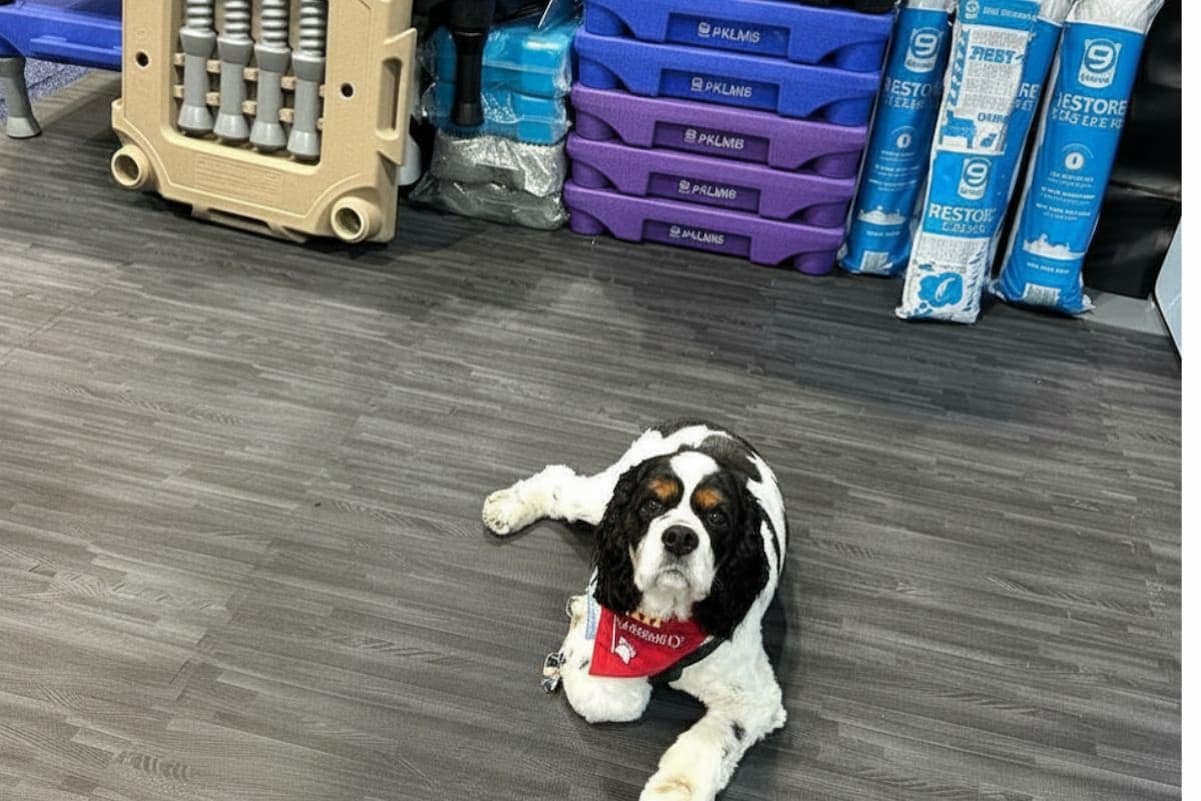
When outdoor training time is limited, the right tools create clear boundaries, encourage focus, and prevent the kind of boredom that turns your couch into a chew toy.
KLIMB Training Platform
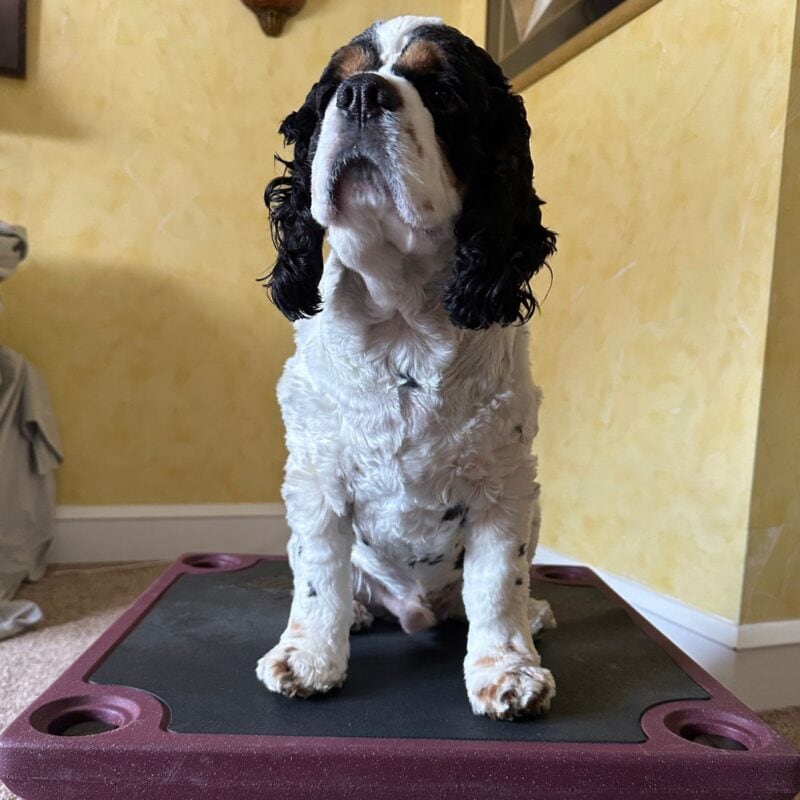
The KLIMB training platform is an elevated, durable platform designed to give dogs a clearly defined place to settle, focus, and practice training behaviors. Having a physical boundary helps most dogs understand exactly where they’re expected to be — which reduces confusion and speeds up learning.
Place training is especially helpful in warmer weather because it encourages calm positioning, patience, and impulse control without requiring intense physical exertion. Even short sessions working on “place,” “stay,” or relaxed observation can provide meaningful mental stimulation while keeping activity levels appropriate for the temperature.
Dog trainer Robin Bennett uses the KLIMB for clear communication with dogs. She says trainers use it to reduce confusion and stress and for “go to your place” behaviors.
Sir Alvin is literally obsessed with the KLIMB. When not in official use, he likes to rest on it, watch TV on it, chew his treats on it, and even take a nap on it, thanks to the Blue-9 Restore Dog Bed that is machine washable and easily secures with built-in elastic straps.
SAVE 20 PERCENT: Use code FIDOSE20 at checkout to save on most items on Blue9.com
Fun Facts About Our KLIMB Experience
Where we store the KLIMB: The KLIMB easily stores in a corner, a closet, or under most beds, as the legs are removable. We usually keep one KLIMB and one KLIMB Jr in our living room since Sir Alvin uses it so much.
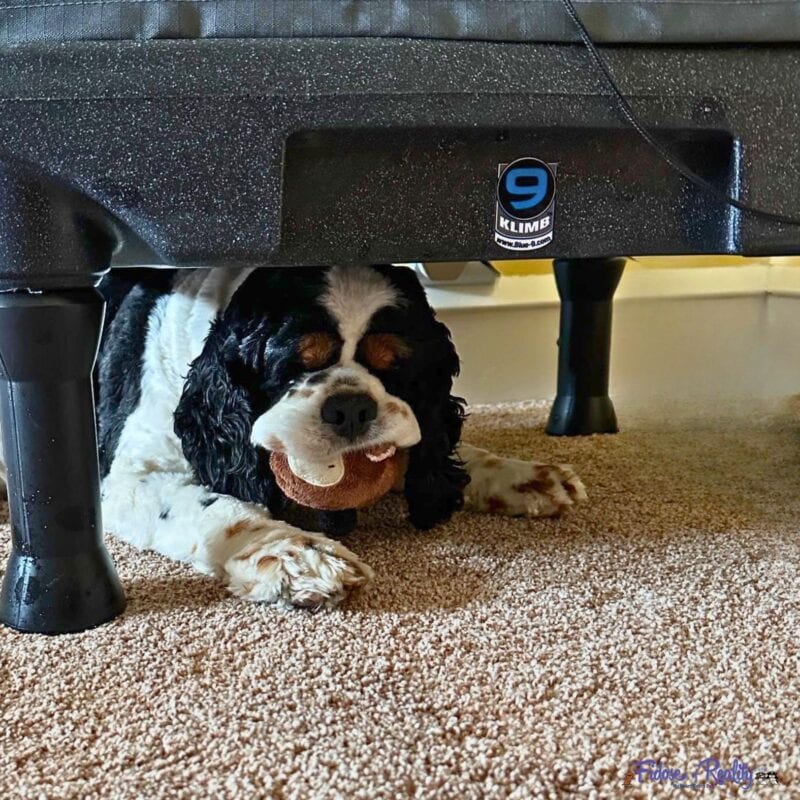
Funny Sir Alvin moment: Sometimes, our pup loves to crawl under the KLIMB and hide from us as a game.
Learning curve: Little to none, as you will see in our full review. The KLIMB is also our “go to your spot” location for when the doorbell rings, when we are training, or just having fun.
Here’s how the KLIMB platform transformed my Cocker Spaniel.
KLIMB Jr.
KLIMB Jr. offers the same structured training concept in a smaller footprint, making it easy to incorporate into everyday routines. It can be especially helpful for shorter sessions when you want to reinforce calm positioning, improve responsiveness, or maintain consistency without needing much space.
Because the platform clearly defines where the dog should be, it can help reduce pacing or restlessness that sometimes increases when outdoor activity is limited due to heat.
We love using two KLIMB Jr training platforms in conjunction with the KLIMB for extra fun, exercises, brain games, and more.
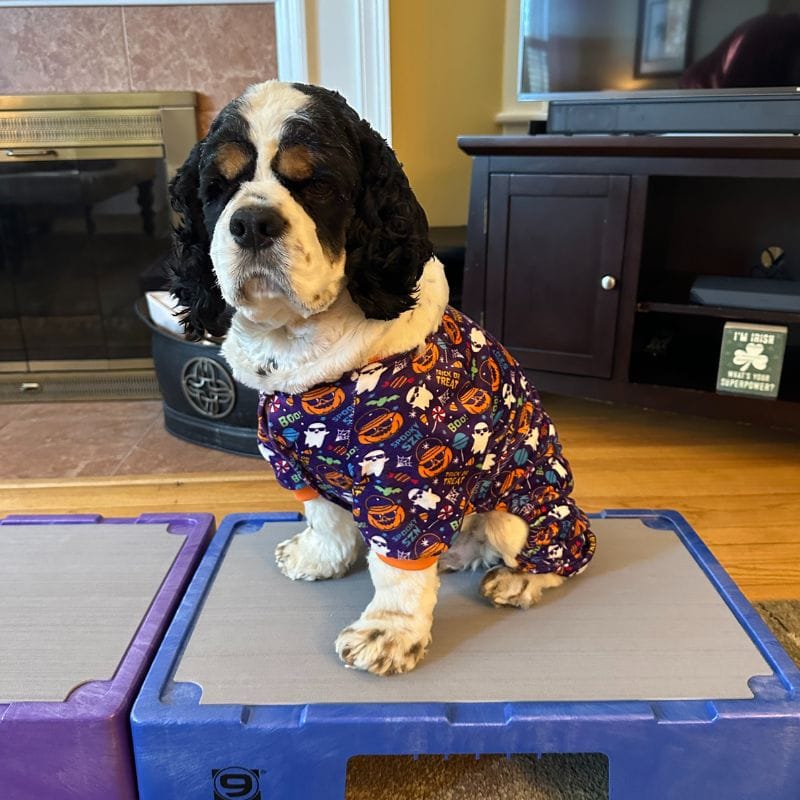
Fun Facts About KLIMB, Jr
- It’s the little sibling of KLIMB
- Great for indoor play and energy burning
- Super portable and lightweight
- Perfectly grippable surface
- Ideal for smaller spaces, apartments, road trips, etc.
Here are the many ways we use the KLIMB, Jr in everyday life.
SAVE 20 PERCENT: Use code FIDOSE20 at checkout to save on most items on Blue9.com
Propel Training Tool
The Propel training tool can be used to encourage controlled movement, body awareness, and confidence-building exercises. Activities that involve thoughtful physical positioning help dogs remain engaged while avoiding excessive exertion.
Practicing slow, deliberate movements helps dogs focus on balance and coordination rather than speed or intensity. This type of work can be particularly useful when hot weather makes high-energy activity less practical.
Fun Facts About the Propel
- It has two totally different surfaces, great for pros and dogs just getting started.
- You control the difficulty level with the air pump.
- It connects easily to the KLIMB, so you can make a fun indoor obstacle course.
- The Propel Air Platform took third place at the 2022 Global Pet Expo New Product Showcase Awards.
Here’s our experience and honest review of the Propel from Blue-9.
SAVE 20 PERCENT: Use code FIDOSE20 at checkout to save on most items on Blue9.com

Practicing Leash Skills Indoors
Yes, you can practice leash manners inside, and it’s actually a great warm-weather drill. Use a short leash in your hallway or living room and work on loose-leash position at a slow, deliberate pace. Focus on attention and responsiveness rather than covering distance.
This type of low-key work reinforces the habits you want without the heat, distraction, or stamina requirements of an outdoor walk. It also primes dogs to be more attentive on actual walks once the temperature drops.
Mental Exercise vs. Physical Exercise: Which Tires Dogs Out More?
Here’s something that surprises a lot of dog owners: mental exercise can be more tiring than physical exercise. A dog that runs for 20 minutes may come home energized. A dog that spends 10 minutes working through impulse control exercises or learning a new behavior often settles more deeply afterward.
This is good news in hot weather. When a long walk isn’t an option, focused training sessions and problem-solving activities can meet your dog’s energy needs without the risk of overheating.
Common Mistakes When Training Dogs in Hot Weather
Skipping training entirely. Understandable, but consistency matters. Even two or three minutes of reinforcing “sit” and “stay” keeps your dog mentally engaged and maintains the habits you’ve built.
Trying to cram in the same workout, just shorter. A high-intensity 10-minute session outdoors in 90-degree heat is still a 10-minute session in 90-degree heat. Reduce both duration and intensity.
Not watching for heat stress cues. Heavy panting, lagging, excessive drooling, and disinterest are signs your dog has hit their limit. End the session immediately, offer water, and move indoors.
Forgetting that pavement radiates heat. If you can’t hold your hand comfortably on the pavement for five seconds, it’s too hot for your dog’s paws.
Pushing through when your dog checks out. The moment your dog mentally leaves the session, you’ve lost the training window. End on a positive note and pick it up later.
How to Stay Consistent With Dog Training Year-Round
Consistency doesn’t mean doing the same thing every day; it means showing up every day, even if “showing up” looks like three minutes of “leave it” practice in the kitchen.
A few strategies that help:
- Anchor training to existing habits. Practice “sit” before meals, “wait” before going outside, or “place” before you sit down to work. No separate session required.
- Use your environment. Practice recall in different rooms. Work on “stay” with low-level distractions like the TV on. Novelty is mental stimulation.
- Keep sessions short enough that you actually do them. A five-minute session you do every day beats a 45-minute session you do twice a month.
When Indoor Training Is the Better Choice
Hot weather is obvious, but indoor training is also the smarter call when:
- Air quality is poor (smoke, high pollen)
- Your dog is recovering from illness or injury and needs low-impact activity
- You’re working on focus and impulse control specifically (fewer outdoor distractions = better concentration)
- You’re introducing a new behavior and want a controlled environment
Frequently Asked Questions
Absolutely. Most essential behaviors (sit, stay, place, recall, impulse control) can be practiced indoors with no equipment beyond a treat pouch and a few square feet of space. Indoor training also tends to produce a cleaner focus because there are fewer competing distractions.
Most veterinarians recommend keeping outdoor exertion minimal when temperatures exceed 85°F, particularly for brachycephalic breeds and dogs with thick coats. Factor in humidity: 80°F with high humidity can feel (and function) like 95°F for a dog. As a general rule: if you’re uncomfortable, your dog is uncomfortable. Adjust accordingly.
Yes, often more so than from physical exercise. Focused problem-solving, learning new behaviors, and practicing impulse control all require sustained concentration, which is genuinely taxing. Don’t underestimate a good 10-minute training session.
Aim for 5 to 10 minutes per session. Multiple short sessions throughout the day are more effective than one long session and far safer in the heat. Short sessions also tend to produce better retention, dogs learn in focused bursts, not marathons.
Impulse control games (wait, leave it, stay), platform work (KLIMB, KLIMB Jr.), slow leash position practice, recall between rooms, and “go to place” are all high-value exercises that work well indoors. Nose work and scent games are also excellent options for high-drive dogs.
Short, shaded walks in the early morning or after sunset are generally safer than midday outings. Avoid pavement that absorbs heat during the day, bring water, and watch your dog’s cues closely. For Cocker Spaniels and other breeds prone to overheating, err on the conservative side.
Why Adjusting Training for Hot Weather Matters
Hot weather doesn’t mean pressing pause on your dog’s development; it means choosing smarter. Shorter sessions, structured tools like the KLIMB platform, and a willingness to move training indoors keep your dog mentally sharp and physically comfortable all summer long.
Sir Alvin has taught me that the best training sessions aren’t always the longest ones. They’re the ones where we’re both present, both engaged, and both having a good time. In summer, that usually means 10 minutes of focused indoor work, a cool treat, and a well-earned nap on the couch.
That’s a win-win all around.
Have questions about hot-weather training or gear you love? Drop them in the comments; I’d love to hear what’s working for you and your dog.