

How to Stop Your Dog From Jumping on People All Year Round

Your guests arrive, the food is ready, but you still can’t stop your dog from jumping on people. I feel you. Of all the dogs I’ve shared life with, only one ever jumped on people. But she didn’t just jump. She got so excited when someone walked through the door that she’d sprinkle a little excitement piddle on the floor. My friend Sandy calls that glee pee.
Despite my trying to help her stay calm, confident, and grounded when visitors stopped by, nothing worked until I thought like my dog. My first dog as an adult challenges taught me firsthand that dogs aren’t “misbehaving” when they jump; they simply haven’t been taught what to do instead. Spoiler alert: Yelling at them, scolding them, or “yanking” their collar or leash are all off limits.
If your dog jumps on guests, whether at home or on the go, I’ve learned that you can absolutely change the behavior with a combination of management, training, and the right tools. Whether you are reading this as the holiday approaches or at any time of year, you are about to get the inside scoop on my favorite positive-reinforcement, trainer-approved tips for a calmer, more confidence-building way to say hello. Let’s make this the year your dog becomes the polite greeter everyone talks about and looks forward to seeing.
Fun fact and disclaimer: I am a proud brand ambassador with Sir Alvin for Blue-9 Pet Products and highly recommend their products as a long-time customer.
Some of the links in this article are affiliate links. As an Amazon Associate, I earn from qualifying purchases. I am also an Etsy and Chewy affiliate.
Why Do Dogs Jump on People in the First Place?
Before you can stop your dog from jumping on people, it helps to understand why dogs do it in the first place. Most dogs jump for two main reasons and a rare third one:
- They want attention.
- They’ve been unintentionally taught that jumping works.
Think like your dog: “Oh boy, Grandma is here, or whoa, dude, I see someone walking toward me!”
Dogs are social beings and naturally want to greet us at face level, so jumping is their way of saying, “Hey, look at me!” Unfortunately, this gets amplified during holidays when you’re greeting guests, not your dog, and they may feel excluded.
Think like a puppy: Puppies learn early on that jumping means praise, laughter, treats, or playtime. So when they are adults, they keep doing it because it’s been reinforced.
But most pet parents are surprised to learn that even scolding or pushing them away counts as attention from their point of view. So toss in visitors or strangers who pet, squeal, or bend down when a dog jumps, and the behavior becomes part of their norm.
Here’s the quick breakdown of why dogs jump:
- They want attention or face-level contact. Jumping is an instinctive greeting and a fast way to say, “Notice me!”
- Holiday excitement boosts everything. New people, smells, and energy make it more difficult for dogs to stay calm.
- Any attention, whether positive or negative, reinforces the behavior. Even eye contact, saying “no,” or pushing them off rewards jumping. You may know or own this dog. I did back in the day. (And it’s okay, help is here!)
- Guests accidentally encourage it. Laughing, petting, or other reactions teach the dog that jumping works. So they do more of it.
- Dogs repeat what pays off. If jumping succeeded even once, they’ll keep trying.
Now that you know the why, here’s how to stop your dog from jumping on people or other pets.

How to Stop Your Dog From Jumping on People
“If your puppy puts their paws on you and then you pet them, or worse, pick them up and cuddle them, they really enjoy that,” says Robin Bennett, Certified Professional Dog Trainer (CPDT-KA). “They just learned jumping up or pawing you is the way to get that.”
Bennett says pet parents must consider what behavior will be acceptable when the pup is fully grown, which is unlikely to be jumping up.
If you have a puppy, stick to the general rule of “all four paws on the floor,” or even a full “sit,” before the puppy is petted or picked up. Ignore them otherwise. It’s best to actually turn your back on that behavior, or leave the area if you can, so they really get ‘when I jump up, I don’t get anything fun or pleasing.’ But the moment they have all four on the floor or sit, lavish them with praise and cuddles.
So what if you have an adult dog, a foster dog, or a rescue dog who jumps on people? Here’s what worked for my Brandy Noel, my excitement jumper. These five steps, with consistency, positive reinforcement, practice, and treats, stopped her from jumping in a few short weeks:
- Reduce emotional reactions: Stay calm when guests arrive so you don’t inadvertently fuel your dog’s excitement. Guests called me in advance, and they knew what was happening.
- Ignore the behavior when jumping happens: No petting, eye contact, or talking while the dog’s paws are off the floor. It’s hard, but it’s a must. My Brandy Noel would often think I didn’t see her, so she positioned herself in front of me. When she did that and used the next step, I rewarded her with treats.
- Use the “Four Paws on the Floor” rule: Require all four feet on the floor before any attention or greeting.
- Teach a reliable sit or other calm greeting cue: Replace jumping with a different behavior, like sitting, before people approach. (and I have just the magical tool for that).
- Have guests follow the same rules: Everyone arriving must ask for the cue (sit/four paws) before engaging. Consistency from everyone helps the dog learn.

What Is the Best Way to Teach a Dog Not to Jump on Guests?
Back in the 1990s, I didn’t have special training platforms that would have made my life and training process a million times easier and smoother. But times have changed, and I’ve trained all my dogs since with the KLIMB and KLIMB, Jr. from Blue-9 Pet Products.
Using the words “go to your spot,” all of my dogs, since Brandy Noel have learned manners early on. I don’t want little soldiers, but I do like my dogs not to don’t jump on people. Both dogs learned that hearing the doorbell means hopping onto their KLIMB, sitting politely, and waiting for a reward.
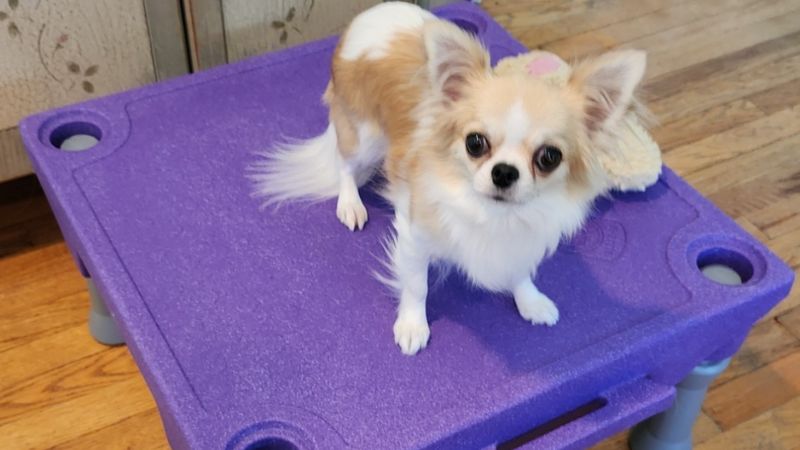
The KLIMB (or KLIMB Jr for smaller pups) gives dogs a defined, elevated place that creates calm, structure, and focus during high-energy moments (like Thanksgiving).
Here are my simple steps you can follow to teach this behavior at home using the Blue-9 products I personally use to make training easier and more successful. Note: Practice this at least 15 minutes a day and always end on a positive note before actually implementing it in real situations:
Choose Your Dog’s “Spot”
Give your dog a defined, elevated place that signals calm behavior. Learn to use the KLIMB or KLIMB Jr by visiting my step-by-step, easy tutorials:
Teach the Cue: “Go to Your Spot”
Use treats to lure and reward your dog for getting onto the KLIMB or KLIMB, Jr. “Go to Your Spot” is a simple cue that tells your dog to move to a designated place and stay there until calmly told, “okay” or whatever release cue you prefer.
SAVE 20 PERCENT AT BLUE-9.COM WITH CODE FIDOSE20 ON MOST ITEMS
Reward Calm Behavior Once They’re on the Platform
Reinforce sitting, staying, and waiting while guests enter. It helps if you have two people to work on this.
Practice Your Guest-Arrival Routine
Doorbell rings → “go to your spot” → reward → release to greet politely. If “go to your spot” doesn’t work right away, or if your guests can’t follow instructions, don’t stress out. It simply means your dog needs more practice without real guests first.
Do a few dry runs using the doorbell, knock, or even a recorded chime so your dog learns the routine before adding people into the mix. And if your guests won’t cooperate, manage the environment instead: keep your dog on a leash, behind a baby gate, or tethered near their KLIMB so they can’t physically run to the door and jump.
Never scold your dog. You want the KLIMB or KLIMB Jr to be happy and rewarding.
Pro Tip: Never send them to their spot when you are frustrated or angry. This defeats the purpose.
Use the Environment to Set Your Dog Up for Success
Combine the KLIMB with a harness or leash for extra control during early training. We love the KLIMB Balance Harness and leash for practice and everyday adventures.
How to Prepare Your Dog Before Guests Arrive
Before the doorbell starts ringing or guests arrive, set your dog up for success with a few simple prep steps. A little proactive planning goes a long way in helping your pup stay calm, focused, and ready to show off their polite greeting skills when company arrives.
- Burn off excess energy: Take your dog for a short walk or play session before guests arrive. A tired dog is a happy dog.
- Practice makes polished: Run through 5 to 10 minutes of KLIMB exercises to keep the behavior fresh in your dog’s mind.
- Prep your setup: Position the KLIMB near the entry, keep treats ready by the door, and set up any management tools, such as gates or a leash.
- Prep your guests: Let visitors know your greeting rules (group text reminders are fantastic for this) so everyone’s on the same page and can help reinforce your dog’s training.
Don’t psych your dog up with things like, “Aunt Susie’s coming,” or “Uh oh, Grandpa and Grandma are here.” These types of excitement builders defeat the purpose.
Fun Fact: Once my dogs understood “go to your spot,” they use it for a lot of things now, such as calm time, chewing a treat, taking a nap, and we train on it for indoor fun, too. It’s a happy place after all!
Bonus
Here are some of the many ways Sir Alvin and I use the KLIMB and KLIMB, Jr.

Common Mistakes That Make Dogs Jump on People More
Inevitably, we are humans and will make mistakes. No worries, as there’s always room to improve. Here are the most common mistakes I’ve seen people make, many of which I used to make, too:
- Allowing guests to reward jumping: Even if they think it’s cute, allowing family and friends to encourage jumping undermines all your training efforts.
- Skipping the settle-first rule: Don’t let your dog greet guests until they’ve gone to their spot and been cued to sit calmly.
- Giving attention for the wrong behavior: Any attention, even yelling or pushing your dog away, can accidentally reward jumping. Yelling is a no-no in our household anyway.
- Waiting until the last minute: Training only on Thanksgiving Day or when guests arrive sets everyone up for failure; practice well in advance.
- Inconsistent expectations: Ensure everyone in the household follows the same greeting rules so your dog doesn’t get mixed messages.
- Failing to manage high-energy moments: Have gates, leashes, and your KLIMB or KLIMB, Jr. ready before arousal levels spike at the door.
FAQs
Q: How long does it take to stop a dog from jumping on people?
A: It depends on your consistency. I recommend 15 minutes a day when your dog is “into it,” without ever forcing your dog to practice. Some dogs improve within days, while others may take a few weeks of regular practice before the behavior becomes reliable.
Q: What if guests encourage my dog to jump?
A: Politely ask them to wait until your dog sits or stays on the KLIMB or KLIMB, Jr. before giving any attention or petting, and explain that you’re working on training.
Q: Can I stop my dog from jumping without a training platform?
A: Yes, you can teach polite greetings without one, but the KLIMB or KLIMB, Jr. adds clarity and structure that makes training faster and more reliable for both you and your dog. Plus, it’s a tool for life to continue bonding and training.
Q: Why does my dog only jump on certain people?
A: Some people are naturally more exciting to dogs. I know folks who use higher-pitched voices or have a ton of energy, and unknowingly reward jumping with immediate attention.
Q: How do I stop my dog from jumping on kids or older adults?
A: Keep your dog on leash or have them stay on the KLIMB or KLIMB, Jr. until they’re calm, and only allow greetings after they’ve settled into a sit.
Q: What should I do if my dog jumps on guests at the door?
A: Calmly reset by guiding your dog back to the KLIMB, reward them for calm behavior, and only release them to greet once they’re composed and settled. Don’t stress. I’ve done a reset and decided not to stress my dog, and worked on training at another time.
Bottom Line on Dogs Who Jump
I’ve shared life with dogs from the day I came into this world. I’ve learned that teaching your dog polite greetings isn’t just about preventing chaos at the door. It’s about creating a calm, happy space for your dog and your guests.
When your dog has a clear job to do and knows exactly what’s expected, they feel more confident and less anxious during high-energy moments.
The Blue-9 KLIMB and KLIMB, Jr. platforms have been game-changers in my own home because they give dogs like Dexter and Sir Alvin a designated spot that brings structure, calm, and peace. These tools aren’t just about obedience; they’re about setting your dog up to succeed and feel good about their role in your holiday celebrations.
Bonus: Use code FIDOSE20 to save 20 percent off at Blue-9 Pet Products on most items.
The key to success is practicing well in advance, not waiting until guests are walking through the door on Thanksgiving or any day. Start now, keep sessions short and positive, and watch your dog transform into the polite greeter you’ve always wanted.
I’d love to hear from you now. What are your best tips for managing dog manners during the holidays? Bark at me in the comments below.
