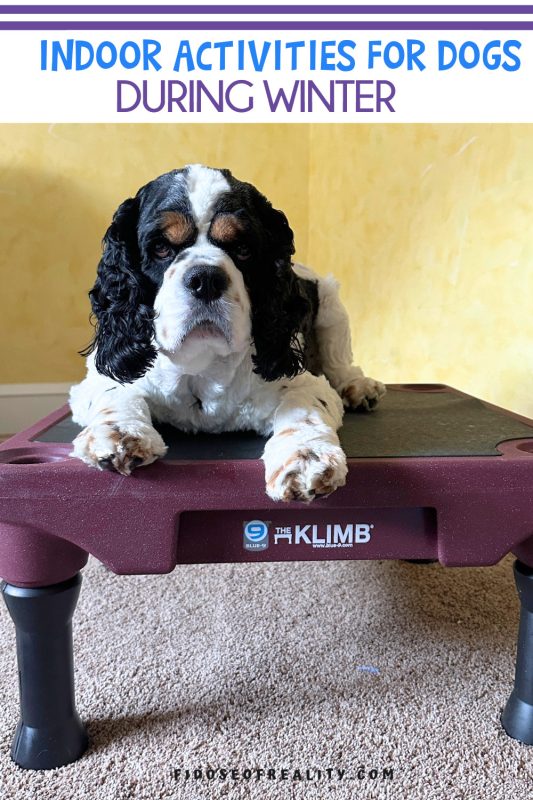
Fun Indoor Activities for Dogs: How To Keep Dogs Active In Winter

The winter blues are a real thing, and science says it affects both people and animals. Indoor activities for dogs work best when your pup enjoys them. Think of how you would feel if you had to use exercise equipment or work with a trainer who didn’t interest you in the least. Indoor activities for dogs should be fun, provide mental stimulation, calm structure, and zero chaos.
As a lifelong dog mom who has dealt with Cocker Spaniels with cabin fever for decades, I’ve learned how to keep them active indoors and have a lot of fun, too. The first rule of thumb is to promise yourself you’ll have fun, too. When you have fun, don’t shout or yell at your dog, and put your phone down, your dog will pick up on your dedicated focus and energy.
If your dog is pacing, whining, or getting into mischief indoors, you’re not alone. The good news? I’ve worked with many positive reinforcement dog trainers over the years, and they all agree that with the right approach, you can keep your dog active, engaged, and emotionally happy all winter long without turning your residence into a demolition zone.
Some of the links in this article are affiliate links. As an Amazon Associate, I earn from qualifying purchases. I am also an Etsy and Chewy affiliate.
Why Do Indoor Activities for Dogs Matter More in Winter?
Cold weather changes everything about your dog’s routine. The days are shorter, so there are fewer opportunities for long walks. Plus, the colder, harsher weather means walks are brief if it all. At some point, you’ve probably begged your dog to “potty” as you shivered outside in the cold, too.
Winter isn’t just downtime for you and your pup. Winter is actually the perfect season to refresh training foundations, build confidence, and deepen your connection with your dog.
Your dog needs indoor activities in winter for many reasons, including:
- Helping to prevent weight gain
- Keeping muscles and joints moving
- Mental stimulation to keep dogs happy
- Human-animal bonding with you
- To keep the digestive system healthy
- Gives dogs something to look forward to daily
Fun fact: My current Cocker Spaniel, Sir Alvin, “knows” when it’s our indoor fun time and will sit and stare at me when those times pop up, which are at least twice a day.
“Exercise occupies their mind, allows them to spend quality time with their family, and tires them out, all of which helps to curb unwanted behaviors,” according to veterinarians at Severna Park Veterinary Hospital. “It is one of the first things animal behavior specialists recommend for pets who are destructive at home.
How Much Indoor Activity Does a Dog Really Need?
Most dogs have varied exercise needs by age and breed. If you started exercising indoors at age 80, that’s awesome, but you wouldn’t start with an hour on the treadmill. Your senior dog is the same way; age matters, and so does what you plan to do with your dog.
The amount of indoor activity your dog needs depends on age, breed, health status, energy level, and your veterinarian’s recommendations. If your dog has health issues or mobility concerns, adapt indoor activities and ensure your dog likes them… or change it up to something else from our list.
Bonus: Got a nervous dog? I created 8 simple tips to help nervous dogs build confidence.
Puppies
Puppies need short, frequent bursts of low-impact activity throughout the day. Their developing joints can’t handle high-impact exercise, such as long fetch sessions or excessive running. Focus on enrichment games and basic obedience training instead, including tips from our list below.
Adult Dogs
Healthy adult dogs need at least 30 minutes of daily activity. High-energy breeds may require 60 to 90 minutes of combined physical and mental exercise. Short training sessions, interactive play, fun training sessions from our list, scent work, and structured indoor games all count toward this total.
Senior Dogs
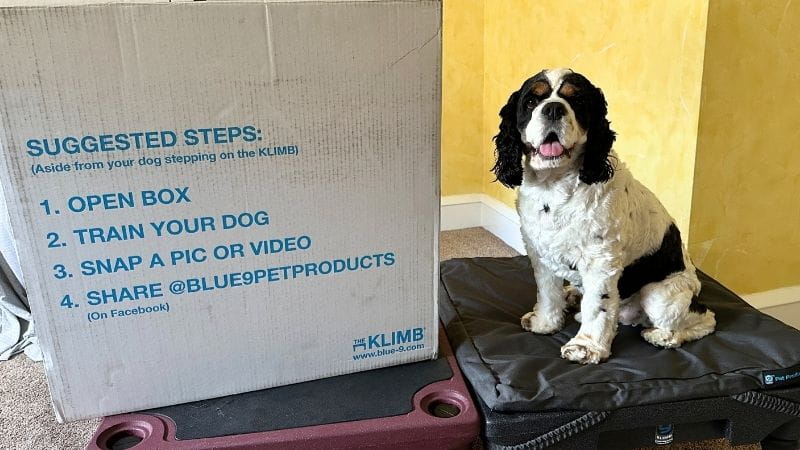
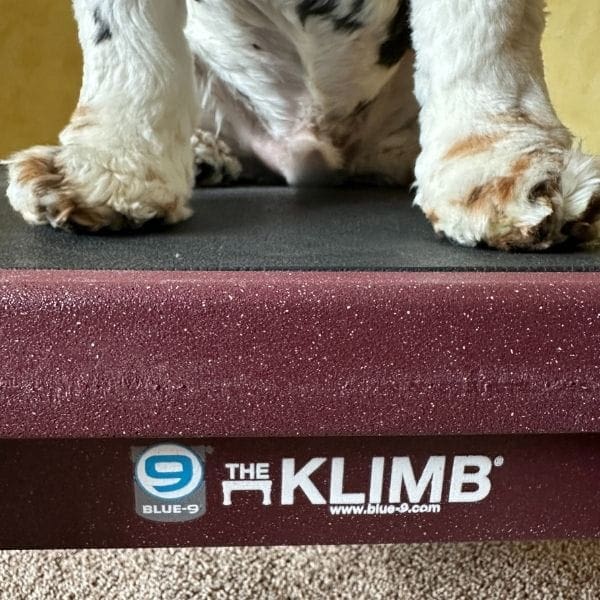
Older dogs still need movement, but in gentler, lower-impact forms. Keep sessions short to avoid overexerting aging joints. During indoor fun with my second Cocker Spaniel, Dexter, we used Blue-9’s KLIMB for its low-step design, which makes it ideal for senior dogs to practice place training without strain. Mental engagement through calm training or scent games works just as well as light physical activity.
Fun Fact: Remember, indoor training counts as exercise. When you engage your dog’s brain through problem-solving, pattern recognition, and self-control, you’re meeting their physical and mental needs simultaneously.
Indoor Training Activities That Build Focus and Calm
Place Training Indoors
Place training is one of the most valuable indoor activities you can teach. It gives your dog a designated spot to settle, builds impulse control, and helps them learn to relax on cue. This skill is especially useful in multi-dog homes or during household activities like cooking or working from home.
Sir Alvin loves the KLIMB’s raised, non-slip surface, which gives him a clear physical boundary, making “place” easier to understand. Start by rewarding your dog for stepping onto the platform, then gradually increase the duration they stay there. Over time, your dog will associate their place with calmness and confidence.
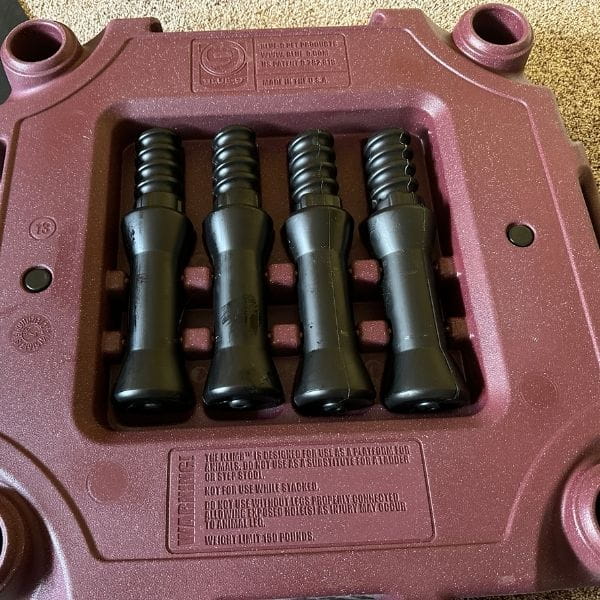
We also recently invested in the KLIMB Jr., which connects directly to the full-size KLIMB. Using both together enabled me to start Sir Alvin on a smaller, more approachable platform and then easily progress him to the larger one as his focus and confidence build. That connection has made it easy to create simple indoor circuits and structured routines that keep training clear, calm, and purposeful. The two platforms connect together!
USE CODE FIDOSE20 to save 20 percent off most items on Blue-9’s website
Five-Minute Confidence Sessions
Short, focused sessions that involve stepping on and off the KLIMB, holding a duration stay, and practicing calm release cues provide an excellent mental workout.
These exercises build body awareness, self-control, and the ability to settle, all essential skills that translate into better behavior throughout the day. You don’t need elaborate setups or long training blocks. Just five minutes of intentional practice can shift your dog’s energy and mindset. I love doing them in sets, psyching my dog up, and rewarding him with a treat or a burst of bubbles from a bubble wand, which is a high-value reward for him.
Controlled Indoor Walking
Indoor walking isn’t just pacing around the house. It’s an opportunity to practice engagement, heel work, and precision.
If you have space, use hallways or open areas to practice turns, stops, and directional changes. The Blue-9 Balance Harness offers control and comfort during these drills, making it easier to communicate with your dog without tension or resistance. I use it with Sir Alvin on cold or rainy days indoors from time to time. Controlled indoor walking builds focus and connection while giving your dog a chance to move their body and stay active.
USE CODE FIDOSE20 to save 20 percent off most items on Blue-9’s website
Simple Indoor Circuits
I created a simple, low-impact indoor movement circuit for Sir Alvin with a few small “stations” for him to move between. He trots like a show dog because he is so happy! For example, the KLIMB, a mat on the floor, the doorway, and back again.
An indoor circuit is essentially a short, structured path you guide your dog through, almost like a mini obstacle course, but much calmer and easier. These controlled transitions build body awareness, improve focus, and help your dog practice moving with intention rather than excitement. It’s an ideal activity for apartment living or smaller homes because it doesn’t require much space, just clear cues and a consistent pattern. The structure is what makes dogs feel secure, engaged, and mentally satisfied, even on days when outdoor exercise is limited.
Pattern Games and Engagement Drills
Simple pattern games are easy ways to keep dogs focused and satisfied indoors. These short, repeatable games tap into natural behaviors like sniffing and targeting while reinforcing calm attention. Kept brief and consistent, they’re an effective way to burn mental energy without overstimulating your dog.
I keep the Blue-9 Treat Pouch on hand so I can deliver rewards quickly and precisely, reinforcing the exact moments Sir Alvinmakes a good choice. These tiny drills become powerful confidence-building exercises, and include things like:
- Up-Down Game: Alternating looking down and up with you helps dogs shift focus safely.
- Ping-Pong Game: Toss treats back and forth to build calm movement and attention.
- Find It Game: Have your dog sniff out treats you drop to help with mental enrichment and engagement.
- Super Bowls: Move calmly between stations to reinforce predictability and engagement.
- Side-to-Side Drill: Reward your dog for following you as you step laterally to stay engaged.
- Eye Contact Game: Reward your dog for making eye contact with you before continuing play or movement.
- Follow the Treat: Alternate dropping and lifting treats to encourage attention shifts.
Simple Training-as-Play Games
Turn basic obedience into a game by asking your dog to move through a sequence: sit, down, place, release. Reward calm execution, not speed. The goal isn’t to get your dog amped up, but rather to build focus and reinforce the idea that calmness pays off. These games take just a few minutes but provide deep mental satisfaction.
Indoor Activities for High-Energy or Working Dogs
Sporting breeds, herding dogs, and adolescent pups often need a bit more complexity to stay satisfied indoors. For these dogs, add slightly harder sequences or increase the duration of calm behaviors.
Try KLIMB stacking drills, where your dog practices multiple behaviors in a row on the platform, or create more intricate movement circuits that include obstacles or directional cues. The message remains the same: structured activities lead to calmer outcomes. High-energy dogs don’t need nonstop action; they need purposeful engagement and clear expectations.
Most high-energy or working dogs, as well as dogs who love learning new things, often enjoy activities on the Blue-9 Propel Balance Platform.
Bonus: Try this 4-Week Dog Fitness Challenge for Healthy Pups
A Simple 10 to 20 Minute Indoor Routine for Any Dog
Here’s a structured mini-routine you can use on any indoor day:
1. Start with 5 minutes of place training on the KLIMB.
Build duration, reward calm settling, and give your dog a clear job. I use this with Sir Alvin as our warm-up, as he knows that stepping onto the KLIMB means it’s time to focus and settle.
2. Spend 5 minutes on an indoor walking drill using the Balance Harness.
Practice engagement, turns, and controlled stops in a hallway or open space. This keeps movement low-impact but purposeful, and it helps Sir Alvin shift from a stationary focus to calm, controlled motion.
3. Finish with 5 minutes of mental work using the Blue-9 Treat Pouch.
Hand touches, name games, simple obedience sequences, or pattern games all work here. This is one of Sir Alvin’s favorite parts: fast, fun, and rewarding without overstimulation.
This short 15-minute routine blends physical movement, mental stimulation, and emotional regulation. It’s repeatable, adaptable, and effective for dogs of all ages, sizes, and energy levels, and it works beautifully for us year-round.
Bonus Indoor Activities with the KLIMB or KLIMB Jr
Here’s a fun video collection of indoor things you and your dog can do with the KLIMB or KLIMB, Jr. for additional activities. Click the picture to see or Click to see the indoor fun with KLIMB.
Common Indoor Activity Mistakes to Avoid
Even with the best intentions, a few common habits can work against the calm, focused dog you are trying to create. One of the biggest mistakes is overdoing it. Too much tug or fetch indoors can spike arousal rather than help your dog settle. Keep indoor training sessions short, structured, and predictable so they build focus rather than chaos.
Another pitfall is pushing dogs into activities they dislike or are not ready for. Just like people, dogs have preferences, comfort zones, and physical limits. Forcing something that is supposed to be fun often backfires, while offering preferable choices builds confidence.
It is also important to avoid raising your voice when your dog gets excited or confused. Yelling increases stress and makes it harder for your dog to understand what you want. Calm, clear guidance is always best.
Finally, do not forget rest. Expecting nonstop activity sets both you and your dog up for frustration. Dogs need downtime just as much as they need engagement. Balance, patience, and clear structure make indoor activities more successful and more enjoyable for everyone involved. I always end on a positive note. Even if that note is paw shake or sit, stay, etc.
Indoor Activities for Different Living Spaces
Apartments
In apartments, prioritize quiet, low-impact activities like place training, hand targeting, and controlled indoor walking. Avoid high-energy games that involve jumping or running, as these can disturb neighbors and overstimulate your dog in a confined space.
Small Homes
Small homes benefit from creative use of vertical space and furniture. Use the KLIMB as a central station and create mini-circuits that incorporate different rooms. Short hallways are perfect for heel work and engagement drills.
Multi-Dog Households
In multi-dog homes, practice place training with all dogs at once or rotate individual training sessions to prevent competition and maintain focus. Teaching each dog to settle on their own platform reduces household chaos and builds independence.
When Indoor Activities For Dogs Aren’t Enough
Indoor structure is incredibly helpful, but it cannot fully replace the benefits of being outdoors. Fresh air, natural light, and the chance to sniff the world are still important for your dog’s mental and physical well-being.
On days when it is freezing and you do not want to stay outside for long, aim for very short outdoor moments instead of full walks. Even a quick five-minute sniff break in the cold can provide sensory enrichment that indoor games cannot match. Think of indoor activities as a strong foundation for your dog’s day, with brief outdoor moments added in whenever the weather allows.
Frequently Asked Questions
What are the best indoor activities for dogs?
The best indoor activities combine mental stimulation and calm structure. Place training, controlled indoor walking, and pattern games are highly effective and easy to implement in any living space.
How do I keep my dog active indoors in winter?
Focus on short, structured training sessions that engage your dog’s brain and body. Use tools like the KLIMB or KLIMB, Jr. for place training and the Balance Harness for indoor walking drills. Break activities into three to five-minute intervals throughout the day.
How long should I exercise my dog indoors?
Most dogs benefit from 15 to 30 minutes of focused indoor activity daily, divided into shorter sessions. Quality and structure matter more than duration.
Does indoor training really tire dogs out?
Yes. Mental stimulation is twice as fatiguing as physical exercise alone. A structured five-minute training session can have the same calming effect as a much longer walk.
Are indoor activities good for puppies?
Absolutely. Indoor activities are ideal for puppies because they build focus, confidence, and impulse control in a controlled environment. Keep sessions very short, as in two to three minutes, to match their attention span.
Final Thoughts On Keeping Dogs Active Indoors
If you and your dog enjoy this kind of structured indoor activity, there is so much more you can explore. Short training sessions, mental enrichment, and confidence-building games can transform how your dog feels during the winter months and beyond. To dive deeper, check out these additional resources:
101 Indoor Things to do with Dogs
How the KLIMB Changed My Dog’s Training Time
Balance Training Fun with Propel